Calories in thepla: methi thepla per piece, by size and by the oil you use
One 36 g methi thepla is 125 calories and 41% fat. A home thepla runs 77 to 142 depending on oil. Per piece, per plate, and against roti and every paratha.
By Sheeraz Ali · Published November 20, 2026 · 7 min read
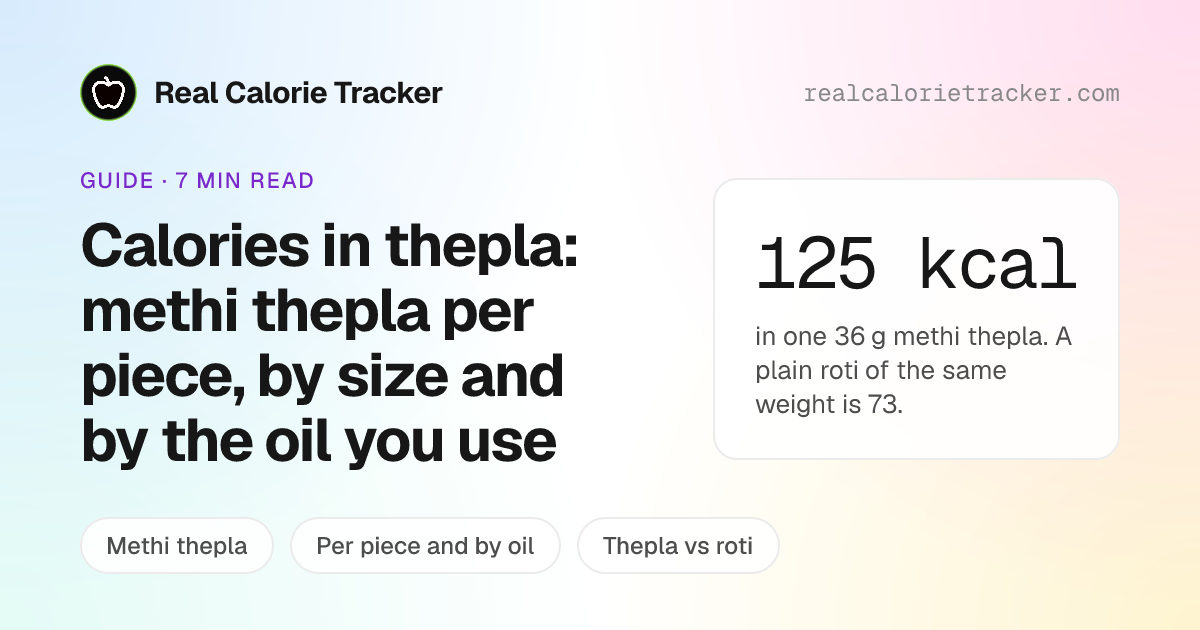
One medium methi thepla, about 36 g, is 125 calories, with 3.2 g of protein and 5.7 g of fat. Two of them with a spoon of chunda and a katori of curd make a 420-calorie breakfast. The number that surprises people is the comparison: a plain roti of the same 36 g is 73 calories, so a thepla costs about 70 percent more per bite, and almost all of the difference is oil.
The per-piece figure comes from the Indian Nutrient Databank (INDB), which builds each dish from a standard recipe with ingredient values from ICMR-NIN’s IFCT 2017. The home-recipe table further down is my own build from IFCT and USDA ingredient rows, and it is labelled as an estimate. Every dish links to its page in the Indian food database.
Thepla by size
Recipe sites list anything from 77 to 120 calories for “one thepla” without saying how big it is. Weight is what decides it, so here is the INDB methi thepla at the sizes you actually see: the small travel thepla that comes stacked in a steel dabba, the standard home one, and the large thin ones from a Gujarati thali restaurant.
| Thepla | Weight | Calories | Protein | Fat | Fibre |
|---|---|---|---|---|---|
| Methi thepla, small | 25 g | 87 | 2.3 g | 4.0 g | 1.9 g |
| Methi thepla, medium | 36 g | 125 | 3.2 g | 5.7 g | 2.7 g |
| Methi thepla, large | 50 g | 173 | 4.5 g | 8.0 g | 3.8 g |
| Methi thepla × 2 | 72 g | 249 | 6.5 g | 11.4 g | 5.5 g |
| Methi thepla × 4 (a train lunch) | 144 g | 498 | 13 g | 23 g | 11 g |
The INDB row works out to 346 calories per 100 g. If you own a kitchen scale, weigh one thepla from your own batch once and multiply by 3.5; that number is good for every batch you make the same way.
Why a thepla costs more than a roti
Two things separate a thepla from a chapati, and both are oil.
The first is the moyan, the oil kneaded into the dough. A roti dough is atta and water. Thepla dough gets a tablespoon or two of oil per 200 g of atta, plus curd and sometimes besan, which is what keeps it soft for three days in a tin. That oil is spread through every thepla, so you can’t see it and you can’t scrape it off.
The second is the roasting oil. A roti goes dry onto the tawa and puffs. A thepla is rolled thin, cooked on both sides and brushed with oil while it cooks, half a teaspoon on a light hand and a full teaspoon on a heavy one. Each half teaspoon is about 20 calories. Because the thepla is thin, there is a lot of surface per gram to take that oil up.
Put together, the INDB methi thepla gets 41 percent of its calories from fat. A plain chapati gets 16 percent. The methi leaves themselves add almost nothing: IFCT lists fresh fenugreek leaves at 34 calories per 100 g, and a whole batch uses about 50 g, so 17 calories spread across ten theplas.
Home thepla, by how much oil you use
This is an estimate from ingredients, for a batch of ten theplas from 200 g of atta (IFCT, 320 kcal per 100 g), 50 g of fresh methi, 20 g of besan and 60 g of curd, with vegetable oil at 884 kcal per 100 g. Without any oil that dough is 770 calories, or 77 per thepla. Everything above that is the oil.
| Oil in the dough (per 200 g atta) | Tawa oil per thepla | Calories per thepla | Share from fat |
|---|---|---|---|
| None | None | 77 | 8% |
| None | ½ tsp | 97 | 27% |
| 1 tbsp | None | 89 | 21% |
| 1 tbsp | ½ tsp | 110 | 36% |
| 2 tbsp | ½ tsp | 122 | 43% |
| 1 tbsp | 1 tsp | 130 | 46% |
| 2 tbsp | 1 tsp | 142 | 51% |
The INDB row at 125 sits right in the middle of this table, which is a decent sign that both are describing the same food. A normal home thepla is 110 to 125. The travel batch, where people add more oil so the theplas last a week, is 130 to 145.
The cheapest saving is on the tawa, not in the dough. Dropping from a teaspoon to half a teaspoon of brushing oil saves 20 calories a thepla, 80 on a four-thepla lunch, and you will barely notice it. Cutting the moyan to zero saves less and gives you a thepla that goes stiff by the next morning, which defeats the point of making theplas.
Thepla against other breads
Per piece, as each one is usually made. All values are INDB except the roti, which is our curated whole-wheat roti.
| Bread | Weight | Calories | Protein | Fat |
|---|---|---|---|---|
| Chapati, plain | 36 g | 73 | 2.1 g | 1.3 g |
| Roti, medium | 40 g | 119 | 3.8 g | 2.9 g |
| Methi thepla | 36 g | 125 | 3.2 g | 5.7 g |
| Methi paratha | 91 g | 135 | 3.9 g | 3.9 g |
| Plain paratha | 56 g | 167 | 2.9 g | 9.5 g |
| Besan and spinach paratha | 82 g | 177 | 4.5 g | 9.9 g |
| Potato paratha | 93 g | 191 | 3.4 g | 9.5 g |
| Paneer paratha | 85 g | 224 | 6.8 g | 12.4 g |
Thepla beats every paratha per piece because it is smaller and has no stuffing. It loses to a dry chapati at the same weight. If your choice is two theplas or one aloo paratha, the theplas are 249 calories against 191 for the INDB paratha, or 280 for our heavier 100 g aloo paratha, so it is closer than it looks. The paratha guide has the full list, including tawa ghee on top.
Protein is where thepla is weak. At 2.6 g per 100 calories it is in the same bracket as a paratha, and a long way behind a Gujarati breakfast like dhokla at 6.2 g per 100 calories. The dhokla guide compares the two directly.
What goes next to it matters more than the thepla
Nobody eats thepla plain. These are the usual companions, per portion:
| With it | Portion | Calories |
|---|---|---|
| Dry mango chutney (chunda) | 1 tbsp (28 g) | 83 |
| Mango pickle | 1 tsp (10 g) | 19 |
| Curd | 1 katori (150 g) | 90 |
| Dry potato sabzi | 1 bowl (105 g) | 108 |
| Home chai with 2 tsp sugar | 1 cup (150 ml) | 86 |
A typical thepla breakfast of two theplas, a tablespoon of chunda and a cup of chai is 418 calories, and 83 of those are the chunda, which is mostly sugar. Swap the chunda for a katori of curd and the plate is 425, with 4 g more protein from the curd. That is the version I’d eat. The curd adds volume and protein for the same calories the chunda was costing, and the chutney and pickle guide shows how fast a heaped spoon of chunda adds up.
On a train or a flight, where four theplas and a pickle sachet are the whole meal, you are at about 520 calories with 13 g of protein. That is a fair lunch by calories and a poor one by protein. A pack of roasted chana or a carton of chaas next to it fixes the protein without much cost.
Thepla on a diet
Thepla fits a weight-loss plan fine if you count it as a 125-calorie bread and not as a roti. The common logging mistake is entering “roti” for each thepla, which undercounts by 6 to 52 calories a piece depending on which roti entry is used, and up to 200 over a four-thepla day.
Three rules that keep it in budget:
- Two theplas, not four. At 249 calories, two make a normal bread portion for a meal. Four is a whole meal on its own before anything else.
- Half a teaspoon on the tawa. That is the 110 to 122 row in the home table above.
- Curd over chunda. Seven more calories, four more grams of protein.
ICMR-NIN’s My Plate for the Day budgets 27 g of fats and oils for a whole 2,000-calorie day. Four travel theplas, made with a tablespoon of oil in the dough and a teaspoon on the tawa for each, carry about 24 g of added oil between them. That is most of the day’s budget spent on bread.
The tracker has methi thepla by the piece and by weight, so a batch you’ve weighed once logs in one tap. To set the daily number those theplas fit into, use the calorie deficit calculator, and for a full Indian week built around foods like this, see the Indian diet plan for weight loss.
This guide is general information, not medical advice. If you have a medical condition, talk to a doctor or registered dietitian before changing how you eat.
This guide is general information, not medical advice. If you're pregnant, have a medical condition or take medication, talk to a doctor or registered dietitian before changing how you eat.
Written by Sheeraz Ali
Sheeraz builds Real Calorie Tracker and uses it every day. The guides come from his own food tracking and from the IFCT 2017, INDB and USDA data behind the site, with sources linked in the text.
Put it into practice
Log your first meal by grams or by serving. Free, no account needed.
More guides
- What 1,200 calories looks like: two real days, and who should not eat it
Two full 1,200-calorie days, Western (131 g protein) and Indian veg (68 g), item by item. Plus the maths on who 1,200 suits and why most men should skip it.
- What 1,500 calories looks like in a day: three real menus
Three full days at 1,500 calories, Western, Indian vegetarian and Indian non-veg, meal by meal with calories and protein for every item. Plus how to tell whether 1,500 is the right number for you.
- What 1,800 calories looks like: three real days, and who it is a diet for
Three full 1,800-calorie days, home-cooked (137 g protein), a bought-lunch workday and Indian veg, item by item. Plus who 1,800 makes lose weight and who it makes gain.