Mutton vs chicken: calories, protein and iron, cut by cut, from Indian food tables
Raw goat leg is 160 kcal per 100 g with 22 g protein; Indian chicken breast is 168 with 22 g. The cut and the curry matter more than the animal. All cuts inside.
By Sheeraz Ali · Published November 8, 2026 · 8 min read
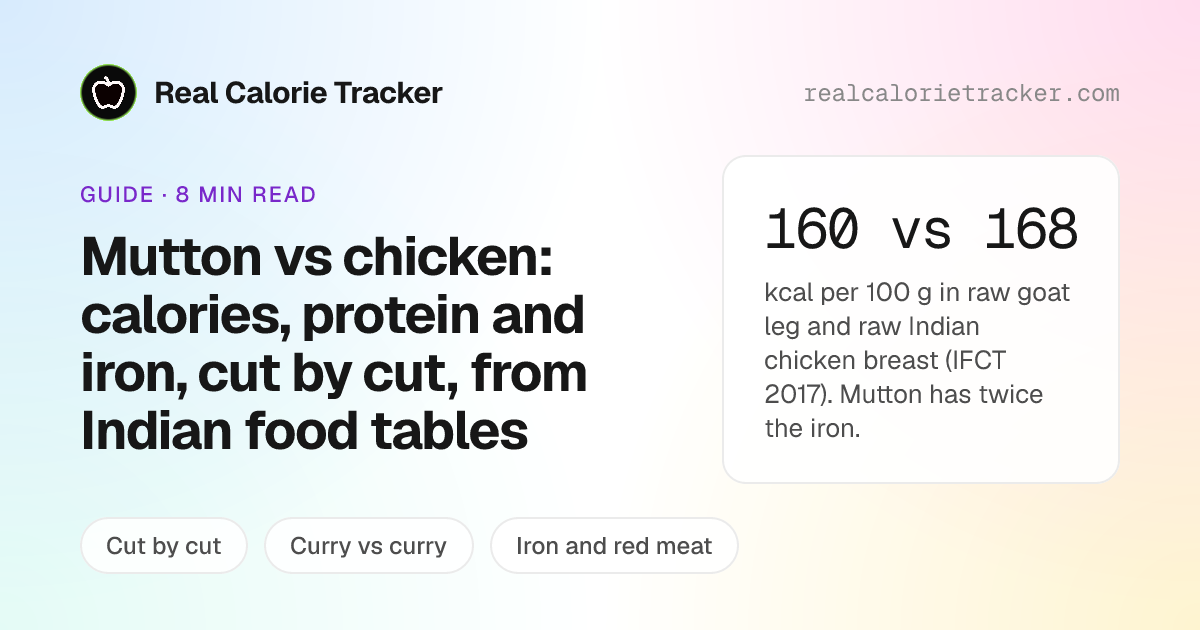
Lean mutton and chicken breast are almost the same food on paper. In India’s own composition tables, raw goat leg is 160 calories per 100 g with 22.1 g of protein, and raw chicken breast is 168 calories with 21.8 g. The fatty cuts match each other too: goat shoulder is 188, chicken thigh 200. So the answer to “mutton or chicken for weight loss” is that the cut and the cooking decide it, and the animal barely does.
Chicken still wins for most people, for a practical reason rather than a nutritional one: lean is the default way chicken is sold (boneless, skinless breast), while mutton in India usually comes as a mixed curry cut with fat and bone. Mutton wins on iron by more than double. And mutton is red meat, which has a weekly limit that chicken does not.
The numbers here are from IFCT 2017, the Indian Food Composition Tables published by ICMR-NIN, for the raw meat, and from the Indian food database for cooked dishes.
Why the numbers you have seen online are different
Most “mutton vs chicken” pages put mutton at 250 to 294 calories per 100 g against chicken’s 165, and conclude that mutton is the heavy option. Those mutton numbers are American cooked lamb. Our lamb entry, from USDA, is exactly that: 294 calories and 21 g of fat per 100 g, cooked. Three things make it the wrong comparison:
- Mutton in India mostly means goat, and goat is a lean animal. Western lamb is young sheep raised for fat cover.
- It compares cooked lamb with cooked chicken breast but picks a fatty lamb composite against the leanest chicken cut there is.
- IFCT’s Indian broiler chicken is fattier than American chicken. Raw breast is 168 calories with 9 g of fat per 100 g in IFCT, which is about what USDA lists for chicken breast after cooking (165), when water loss has concentrated it.
Compare like with like, raw against raw from the same Indian tables, and the gap closes.
Cut by cut: raw meat, per 100 g
| Cut (raw, IFCT 2017) | Calories | Protein | Fat | Iron |
|---|---|---|---|---|
| Sheep chops | 119 | 18 g | 5.2 g | 2.2 mg |
| Goat chops | 136 | 20.4 g | 6 g | 1.9 mg |
| Goat leg | 160 | 22.1 g | 7.9 g | 1.8 mg |
| Sheep leg | 164 | 21.4 g | 8.7 g | 1.5 mg |
| Chicken breast, skinless | 168 | 21.8 g | 9 g | 0.8 mg |
| Goat shoulder | 188 | 20.3 g | 11.9 g | 1.5 mg |
| Chicken wing, skinless | 193 | 17.4 g | 13.8 g | 1.4 mg |
| Chicken thigh, skinless | 200 | 18.2 g | 14.2 g | 1.1 mg |
| Sheep shoulder | 201 | 18.2 g | 14.3 g | 1.6 mg |
| Goat liver | 126 | 20.3 g | 4.9 g | 6.6 mg |
| Chicken liver | 124 | 21.6 g | 4.1 g | 9.9 mg |
Read it top to bottom and the species disappears. The leg and chop cuts of goat and sheep are as lean as Indian chicken breast or leaner. The shoulders sit with chicken thigh and wing. If you buy goat leg (raan) and trim it, you are eating a lean meat by any standard.
Cooking changes all of these by the same proportion. Meat loses about a quarter of its weight as water, so 100 g raw becomes roughly 75 g cooked and the per-100 g figure rises by a third; the cooked vs raw weights guide explains how to log either way without mixing them up.
Curry vs curry: the dishes you actually eat
Nobody eats raw goat leg. What reaches the plate is a curry, a biryani or a kebab, and here the recipe dominates.
| Dish | Portion | Chicken | Mutton |
|---|---|---|---|
| Korma (chicken / mutton) | 1 katori (150 g) | 222 kcal, 14.7 g protein | 174 kcal, 10.7 g protein |
| Yakhni (chicken / mutton) | 1 katori (150 g) | 149 kcal, 16.1 g | 156 kcal, 12.4 g |
| Seekh kebab (chicken / mutton) | 2 kebabs (100 g) | 215 kcal, 19 g | 250 kcal, 18 g |
| Biryani (chicken / mutton) | 1 plate (300 g) | 495 kcal, 22.8 g | 573 kcal, 22.2 g |
| Pulao (chicken / mutton) | 1 plate (300 g) | 324 kcal, 18.3 g | 393 kcal, 19.5 g |
Mutton comes out 5 to 21 percent higher in four of the five pairs, and the korma pair goes the other way only because INDB’s mutton korma is a thinner recipe with less meat in the katori. That pattern is what you would expect from the raw table: cooks reach for shoulder and mixed curry cut for mutton, and those carry more fat than chicken breast. A home chicken curry is 270 per katori; mutton do piaza, built on a thick layer of fried onion, is 275. The chicken curry guide has 13 chicken dishes and the other mutton curries per katori.
Two things move a mutton dish more than the meat does. The first is oil: mutton takes longer to cook, and many recipes start it in more oil or ghee to brown it, which is pure fat added to the pot. The second is fat on the meat. Goat shoulder is 28 calories per 100 g above goat leg in the table, and a curry cut with strips of fat left on is further above that again. Ask the butcher for leg pieces, cut off what fat you can see, and a mutton curry costs about what a chicken thigh curry does.
Iron: where mutton clearly wins
Goat leg has 1.8 mg of iron per 100 g against 0.8 mg in chicken breast, more than twice as much. ICMR-NIN’s 2020 recommended dietary allowances are 19 mg a day for adult men and 29 mg for women, so a 150 g raw portion of goat leg (2.7 mg) gives a woman about 9 percent of her day and the same chicken breast about 4 percent. Neither is a big share. The bigger point is the type: meat iron is heme iron, which the body absorbs much better than the iron in dal, spinach or wheat (NIH Office of Dietary Supplements).
If iron is the reason you are choosing mutton, liver beats both muscle meats by a distance. Chicken liver has 9.9 mg per 100 g, goat liver 6.6, at about 125 calories either way.
The red meat limit
Mutton and goat count as red meat. The UK’s NHS advice is that anyone eating more than 90 g of cooked red and processed meat a day should cut down to an average of 70 g, because of the link with bowel cancer; it names lamb, mutton and goat in that list. Chicken is not part of it.
In practice that is a generous limit for most Indian households. 70 g a day is about 490 g a week, cooked. A katori of mutton curry holds perhaps 60 to 80 g of meat (my estimate; it depends on the bone), so mutton two or three times a week sits well inside it. The people who need to watch it are the ones eating mutton daily, or mutton plus processed meats like sausages and salami.
Which to pick
| Goal | Better choice | Why |
|---|---|---|
| Lowest calories for the protein | Chicken breast, or trimmed goat leg | 13 to 14 g protein per 100 kcal raw, the same for both |
| Restaurant order | Chicken, cooked dry | Tandoori chicken is 263 per leg with 37.5 g protein; no mutton item comes near |
| Iron | Mutton, or any liver | 2x the iron of breast, as heme iron |
| Every day | Chicken | No red meat ceiling |
| Biryani | Chicken, by about 80 kcal a plate | Mutton biryani recipes carry more fat |
So my rule is simple. Chicken is the everyday meat. Mutton is a two-or-three-times-a-week meat, bought as leg rather than curry cut when I have the choice, and it costs about the same calories as chicken thigh when it is cooked with a normal amount of oil. If you are eating out, the tandoor beats the gravy for both animals: the tandoori chicken guide has every kebab per piece, and the biryani guide shows what a plate really costs. For a whole week planned this way, with one mutton lunch and chicken, fish or eggs every other day, see the Indian non-veg diet plan for weight loss.
Work out your protein target with the macro calculator, then log the meat by its raw weight in the tracker; goat, sheep and chicken cuts are all there with IFCT values.
This guide is general nutrition information, not medical advice.
This guide is general information, not medical advice. If you're pregnant, have a medical condition or take medication, talk to a doctor or registered dietitian before changing how you eat.
Written by Sheeraz Ali
Sheeraz builds Real Calorie Tracker and uses it every day. The guides come from his own food tracking and from the IFCT 2017, INDB and USDA data behind the site, with sources linked in the text.
Put it into practice
Log your first meal by grams or by serving. Free, no account needed.
More guides
- What 1,200 calories looks like: two real days, and who should not eat it
Two full 1,200-calorie days, Western (131 g protein) and Indian veg (68 g), item by item. Plus the maths on who 1,200 suits and why most men should skip it.
- What 1,500 calories looks like in a day: three real menus
Three full days at 1,500 calories, Western, Indian vegetarian and Indian non-veg, meal by meal with calories and protein for every item. Plus how to tell whether 1,500 is the right number for you.
- What 1,800 calories looks like: three real days, and who it is a diet for
Three full 1,800-calorie days, home-cooked (137 g protein), a bought-lunch workday and Indian veg, item by item. Plus who 1,800 makes lose weight and who it makes gain.