Calories in biryani: chicken, mutton and veg, per plate and per 100 g
A 300 g plate of chicken biryani is about 495 calories with 23 g protein; mutton is 573, veg 480 to 525. Restaurant plates are bigger and oilier. Every number, by weight.
By Sheeraz Ali · Published October 30, 2026 · 7 min read
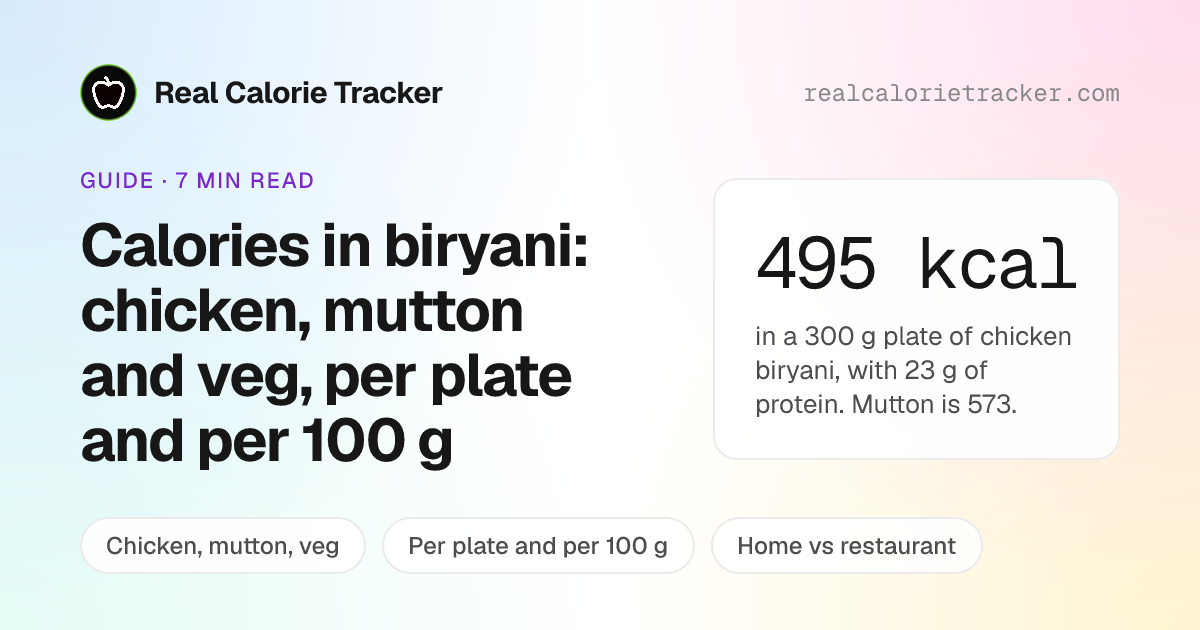
A 300 g plate of home-style chicken biryani is about 495 calories and 23 g of protein. Mutton biryani is about 573 for the same plate (the meat itself is not the reason; mutton vs chicken explains), veg biryani 480 to 525. Per 100 g, chicken biryani is 165 calories, which is only 35 more than plain boiled rice. Biryani is not an especially fattening dish. It is a dish people eat 500 g of.
The numbers come from the Indian Nutrient Databank (standard recipes with measured household portions) and our Indian food database, with plain cooked rice from USDA FoodData Central. Each dish links to its own page.
Biryani and the rice dishes it gets compared with
Everything below is a 300 g plate, which is a full home serving: roughly two heaped cups.
| Dish | Per 100 g | 300 g plate | Protein | Fat |
|---|---|---|---|---|
| Chicken biryani | 165 | 495 | 23 g | 16.5 g |
| Mutton biryani | 191 | 573 | 22 g | 23 g |
| Veg biryani | 160 | 480 | 10.5 g | 13.5 g |
| Vegetable biryani, INDB recipe | 175 | 525 | 9.5 g | 28.5 g |
| Jeera rice | 170 | 510 | 9 g | 15 g |
| Veg pulao | 150 | 450 | 10.5 g | 12 g |
| Plain pulao | 140 | 420 | 7 g | 14 g |
| Plain white rice | 130 | 390 | 8 g | 1 g |
Two things in that table go against what most people assume.
Chicken biryani is the best choice on it. It has about the same calories as veg biryani or jeera rice and more than twice the protein. If you are choosing between a veg and a chicken biryani for macros, the chicken one wins, and the chicken vs veg biryani comparison shows it nutrient by nutrient. The veg version earns its calories from oil and rice; the chicken version earns some of them from meat.
Mutton costs about 80 more per plate than chicken for slightly less protein. Mutton on the bone is fattier than chicken, and that fat renders into the rice during the dum. You can see it in the fat column: 23 g against 16.5.
Pulao is the lighter rice dish, but only if it is a vegetable one. Matar and mixed vegetable pulao come in at 109 to 113 calories per 100 g in INDB’s recipes, well under any biryani here, while peanut and navratan pulao overtake it. The pulao guide has all eleven by plate.
The two veg biryani rows show how much the recipe matters. Same name, same weight, and the INDB recipe has twice the fat of our standard entry, which is the difference between frying the vegetables in a spoonful of oil and frying them in several. Without seeing the kitchen you cannot know which you have, so log the higher number when you eat out.
How much is on your plate
Biryani is the dish where portion size swamps everything else. This is chicken biryani at 165 per 100 g:
| Portion | Weight | Calories | Protein |
|---|---|---|---|
| 1 cup, level | 150 g | 248 | 11 g |
| A modest home plate | 250 g | 413 | 19 g |
| A full home plate | 300 g | 495 | 23 g |
| A generous plate | 400 g | 660 | 30 g |
| A full delivery box, eaten alone | 600 g | 990 | 46 g |
The last two rows are where biryani diets go wrong. A delivery “full” biryani is sized to be the whole meal for one hungry person, and finishing it is easy because rice packed with meat and fried onion goes down fast. I would weigh one delivery box once, on any kitchen scale, then log every order from that number.
Why restaurant biryani is higher
The values above are home recipes. Restaurant and delivery biryani is higher per gram, for three reasons you can see in the cooking.
Ghee between the layers. Dum biryani is assembled in layers and sealed. Restaurants pour ghee over each layer, and it ends up in the rice. A tablespoon of ghee is 126 calories. My estimate for a typical restaurant plate is one to two tablespoons more than a home recipe uses, so add 125 to 250 to the home number.
Birista. The fried onion on top is sliced onion deep-fried until brown and crisp. Onion loses most of its water and holds on to a good share of the frying oil, so a handful of birista is mostly oil by calories.
Rice to meat ratio. A home cook adds chicken until it looks right. A restaurant portions the expensive part. Chicken biryani has 7.6 g of protein per 100 g, which works out to roughly a fifth to a quarter of the plate being chicken (my estimate from the protein; cooked chicken breast is 31 g per 100 g). Fewer pieces means more rice and ghee per gram, and less protein.
So a 400 g restaurant chicken biryani is not 660 calories. Count it as 800 to 900. That is an estimate, labelled as one: restaurant recipes are not published, and the variation between shops is wide.
What comes with it
| Side | Portion | Calories |
|---|---|---|
| Raita | 1 katori (100 g) | 60 |
| Cucumber raita | 1 bowl (155 g) | 91 |
| Boiled egg (often on top) | 1 large | 72 |
| Mirchi ka salan | 1 katori (100 g) | 150 to 200 (estimate) |
| Chicken tikka as a starter | 1 serving (120 g) | 210 |
Mirchi ka salan is not in our data. The estimate comes from its ingredients: a gravy of ground peanuts, sesame and coconut, with oil on top, where a 100 g katori carries roughly a tablespoon of nuts and seeds and a share of the cooking oil. Raita is the best side by a distance: it is cheap, it cools the spice, and the curd adds a little protein.
A typical delivery order of biryani, salan and raita for one comes to about 1,000 to 1,150 calories by the restaurant estimate above. That is fine as an occasional meal if you know it and plan the rest of the day around it.
How I eat biryani and still hit a target
Plate 250 to 300 g and add a protein side, not more rice. A 300 g home plate (495) with a katori of raita (60) and a piece of tandoori chicken on the side is about 820 calories and 63 g of protein. Swap the tandoori for a second helping of biryani and you eat the same calories with about 25 g less protein.
Make it the only grain in the meal. Biryani with a naan or a paratha alongside is two dinners. The same logic applies to a thali: one grain, then fill up on the sides.
At home, measure the ghee. For a pot that serves four, every tablespoon of ghee you add costs each person about 32 calories. Using 2 tablespoons instead of 5 saves each person about 95 calories, and with good basmati and enough whole spices you will not miss it.
Order chicken, share the box. One full delivery biryani split between two, with raita and a salad, is about a 700-calorie dinner by the restaurant estimate. The same box eaten alone is 1,200 or more, most of the day for anyone on a 1,500-calorie target.
If biryani is your weekend meal, the calorie deficit calculator tells you how much room your daily target leaves for it, and the tracker has chicken, mutton and veg biryani with per-plate and per-cup portions. For the dishes around it, see calories in Indian food and, if you are weighing rice yourself, the guide to cooked vs raw weights.
Written by Sheeraz Ali
Sheeraz builds Real Calorie Tracker and uses it every day. The guides come from his own food tracking and from the IFCT 2017, INDB and USDA data behind the site, with sources linked in the text.
Put it into practice
Log your first meal by grams or by serving. Free, no account needed.
More guides
- What 1,200 calories looks like: two real days, and who should not eat it
Two full 1,200-calorie days, Western (131 g protein) and Indian veg (68 g), item by item. Plus the maths on who 1,200 suits and why most men should skip it.
- What 1,500 calories looks like in a day: three real menus
Three full days at 1,500 calories, Western, Indian vegetarian and Indian non-veg, meal by meal with calories and protein for every item. Plus how to tell whether 1,500 is the right number for you.
- What 1,800 calories looks like: three real days, and who it is a diet for
Three full 1,800-calorie days, home-cooked (137 g protein), a bought-lunch workday and Indian veg, item by item. Plus who 1,800 makes lose weight and who it makes gain.