Calories in Indo-Chinese food: chilli chicken, manchurian, noodles and fried rice per plate
A bowl of chilli chicken is 766 calories, a plate of veg hakka noodles about 390, hot and sour soup 126. Every Indo-Chinese order per plate, momos included.
By Sheeraz Ali · Published November 10, 2026 · 8 min read
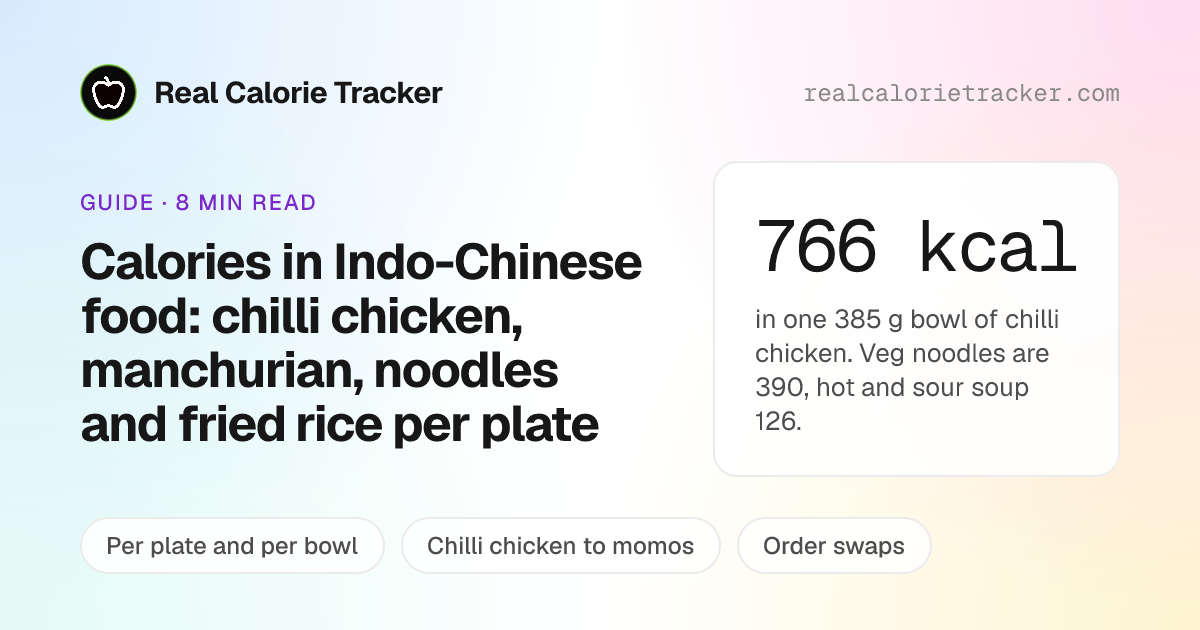
A bowl of chilli chicken is about 766 calories, and that number is the key to understanding Indo-Chinese food: it is mostly fat. A plate of veg hakka noodles is about 390, chicken noodles 520, veg fried rice 425, and a bowl of hot and sour soup only 126. The typical order for two (soup, one dry starter, one gravy, noodles and fried rice) lands between 1,100 and 1,300 calories per person, which is more than most people guess for “Chinese”.
The rows with a link come from INDB, the Indian Nutrient Databank of recipes as cooked in Indian kitchens, through our Indian food database. Several of the most ordered dishes (veg manchurian, chilli paneer, gobi manchurian, momos) either have no usable row or a row I do not trust, so I built those from ingredients and marked them as estimates. The working is further down.
Mains, noodles and rice, per plate
| Dish | Portion | Calories | Protein | Fat |
|---|---|---|---|---|
| Chilli chicken | 1 bowl (385 g) | 766 | 37 g | 64 g |
| Chicken manchurian | 1 plate (445 g) | 632 | 42 g | 53 g |
| Ginger chicken | 1 bowl (385 g) | 497 | 32 g | 32 g |
| Chicken chowmein / hakka noodles | 1 plate (345 g) | 521 | 22 g | 28 g |
| Veg chowmein / hakka noodles | 1 plate (300 g) | 390 | 9 g | 19 g |
| Veg fried rice | 1 plate (350 g) | 424 | 14 g | 19 g |
| Chilli paneer, dry (estimate) | 1 plate, ~120 g paneer | ≈ 600 | 23 g | ≈ 45 g |
| Veg manchurian gravy (estimate) | 1 plate, 8 balls | ≈ 540 | 6 g | ≈ 27 g |
| Gobi manchurian, dry (estimate) | 1 plate, 200 g cauliflower | ≈ 460 | 6 g | ≈ 26 g |
Chilli chicken gets 75 percent of its calories from fat. INDB’s recipe carries 16.6 g of fat per 100 g and only 2.9 g of carbohydrate, so this is a light-coated version; restaurants that batter the chicken in cornflour and egg before frying will be higher still. The chicken manchurian row has a quirk worth knowing: its listed macros add up to about 170 calories per 100 g, not the stated 142, so the true plate figure is probably nearer 750 than 632. I have kept the published number in the table and would log it as 700.
Ginger chicken is the best main on the list. It has 32 g of protein for under 500 calories because it is stir-fried in a sauce rather than fried and then sauced.
Soups, starters and sauces
| Item | Portion | Calories | Protein |
|---|---|---|---|
| Hot and sour soup | 1 bowl (395 g) | 126 | 12 g |
| Sweet corn soup | 1 bowl (390 g) | 125 | 4 g |
| Spring roll | 1 roll (89 g) | 137 | 3 g |
| Veg momos, steamed (estimate) | 6 pieces | ≈ 295 | 7 g |
| Chicken momos, steamed (estimate) | 6 pieces | ≈ 350 | 22 g |
| Momos, fried (estimate) | 6 pieces | add 160–260 | |
| Gobi 65 (estimate) | 1 plate, 200 g cauliflower | ≈ 330 | 6 g |
| Schezwan chutney | 1 tbsp (15 g) | 31 | 0.5 g |
| Soy sauce | 1 tbsp (16 g) | 8 | 1 g |
| Green chilli sauce | 1 tbsp (15 g) | 7 | 0 g |
The soups are the bargain. Hot and sour soup is thickened with a little cornflour, carries egg and sometimes chicken, and gives 12 g of protein for 126 calories. Order it first and you eat less of what follows.
Schezwan chutney is the one condiment to watch, because it is chilli cooked down in oil: 205 calories per 100 g and 78 percent of that from fat. A tablespoon is 31, but the bowl on the table is closer to 60 g once you have dipped the momos and spooned some over the rice.
Why the numbers look like this
Most Indo-Chinese dry dishes are cooked twice. The paneer, chicken or cauliflower is coated in a cornflour and maida batter and deep-fried, then tossed in a hot wok with more oil, onions, capsicum and sauce. The batter is the problem. It is a thin layer of starch with a lot of surface, and fried batter absorbs oil in proportion to its surface. A naked cube of paneer barely changes in the fryer; a battered one comes out with a crust that has soaked up several grams.
Then comes the gravy. Manchurian gravy and the “wet” versions of chilli chicken are thickened with a cornflour slurry, which adds fewer calories than people fear (10 g of cornstarch is 38), but it also makes the sauce cling, and the oil in the wok clings with it. The sweetness comes from ketchup and sugar. That is small next to the oil.
Noodles and fried rice look similar on the plate and come out close on the numbers, 390 to 520 per plate. Both are carbohydrate cooked in oil, at 5 to 8 g of fat per 100 g in INDB’s versions, which is a moderate amount. A street-cart plate of hakka noodles tossed in a ladle of oil is not moderate; count 20 to 40 percent above the table if you can see the oil at the bottom of the box. The calories in ghee and oil guide has the per-spoon numbers: one tablespoon of any oil is about 124 calories, and a restaurant wok gets two or three per dish.
Salt is the other thing these dishes carry. INDB puts a plate of veg chowmein at about 775 mg of sodium and chicken chowmein at about 995 mg, before you add soy or chilli sauce at the table. The WHO limit is under 2,000 mg a day for adults, so one plate of noodles is close to half of it. (INDB’s chicken manchurian row lists 2,415 mg per 100 g, which would be ten grams of sodium per plate and is surely a data error, so I have not used it.)
How the estimates were built
These are the dishes our database does not cover properly, so here are my assumptions, from our ingredient rows, so you can adjust them to what you are served.
| Estimate | What went into it | Calories |
|---|---|---|
| Chilli paneer, dry | 120 g paneer (355), 15 g cornflour and maida batter (55), 8 g oil absorbed in frying (71), 10 g oil in the wok (88), onion and capsicum (25), sauces (25) | ≈ 620 |
| Veg manchurian gravy | Balls: 150 g cabbage and carrot (50), 30 g maida (106), 20 g cornflour (76), 15 g absorbed oil (133). Gravy: 10 g oil (88), 10 g cornflour (38), sauces and aromatics (50) | ≈ 540 |
| Gobi manchurian, dry | 200 g cauliflower (50), 45 g flour and cornflour batter (164), 15 g absorbed oil (133), 10 g wok oil (88), sauces (25) | ≈ 460 |
| Gobi 65 | 200 g cauliflower (50), 40 g batter (146), 15 g absorbed oil (133), no wok toss | ≈ 330 |
| Steamed momos, 6 | Each: 10 g maida in the wrapper (35) plus 15 g filling. Veg filling with a little oil is about 14; raw minced chicken is about 21 | 295 veg, 350 chicken |
INDB does have gobi 65 and cabbage manchurian rows, but they list 0.6 g of protein and under 5 g of carbohydrate per 100 g. A battered, fried vegetable cannot have that little starch, so those recipes are missing the batter and I would not log from them. Fried momos absorb roughly 3 to 5 g of oil each, 160 to 260 calories for a plate of six; that is a guess, and the easy way to check it is to weigh a plate before and after frying at home. Treat every estimate here as plus or minus 20 percent.
Ordering for two without losing the evening
The same table can cost you 1,400 calories or 750, and the difference is mostly which dry dish you pick and whether you order both noodles and rice.
| Order (shared between two) | Per person |
|---|---|
| 2 hot and sour soups, chilli chicken, chicken manchurian, chicken noodles, fried rice | ≈ 1,300 |
| 2 hot and sour soups, chilli paneer, veg manchurian, veg noodles, veg fried rice | ≈ 1,110 |
| 2 hot and sour soups, ginger chicken, steamed chicken momos, veg fried rice | ≈ 760 |
| 2 sweet corn soups, steamed veg momos, veg noodles | ≈ 470 |
The third order is the one I would actually eat: soup first, a sauced main that was not fried, steamed momos for the dumpling fix, and one plate of rice rather than rice and noodles. It still gives each person about 45 g of protein. If you want the dry chilli dish, have it as the one fried item and skip the manchurian, which saves 250 to 300 per person on its own.
Three smaller rules. Ask for the gravy version of chilli chicken or paneer only if you will not drink the sauce. Leave the Schezwan bowl at the far end of the table. And if you are cooking at home, shallow-fry or air-fry the paneer before tossing it; skipping the deep fryer removes most of the absorbed oil, which is around 70 to 130 calories a plate.
For the rest of the Indian takeaway menu, calories in chicken curry covers butter chicken and the gravies, and calories in paneer dishes has the paneer starters. Log the order in the tracker as you eat it, and if you want to know how many calories a takeaway night fits into, the calorie deficit calculator gives you the daily number.
Written by Sheeraz Ali
Sheeraz builds Real Calorie Tracker and uses it every day. The guides come from his own food tracking and from the IFCT 2017, INDB and USDA data behind the site, with sources linked in the text.
Put it into practice
Log your first meal by grams or by serving. Free, no account needed.
More guides
- What 1,200 calories looks like: two real days, and who should not eat it
Two full 1,200-calorie days, Western (131 g protein) and Indian veg (68 g), item by item. Plus the maths on who 1,200 suits and why most men should skip it.
- What 1,500 calories looks like in a day: three real menus
Three full days at 1,500 calories, Western, Indian vegetarian and Indian non-veg, meal by meal with calories and protein for every item. Plus how to tell whether 1,500 is the right number for you.
- What 1,800 calories looks like: three real days, and who it is a diet for
Three full 1,800-calorie days, home-cooked (137 g protein), a bought-lunch workday and Indian veg, item by item. Plus who 1,800 makes lose weight and who it makes gain.