Calories in an apple: by size, by variety, and with or without the peel
A medium apple (182 g, 3 in across) is 95 calories; small 77, large 116. Fuji runs 10 more than Granny Smith, and peeling halves the fibre. Every size inside.
By Sheeraz Ali · Published November 17, 2026 · 7 min read
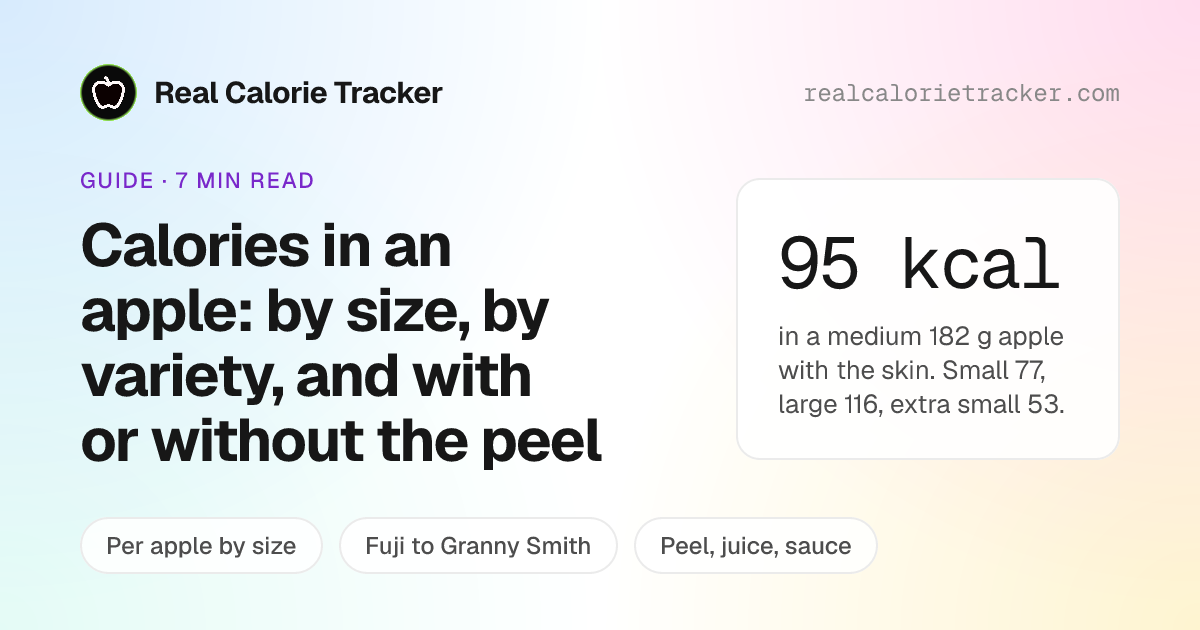
A medium apple, about 3 inches across and weighing 182 g whole with the skin, is 95 calories. A small one is 77 and a large one is 116. Nearly all of that is carbohydrate: 25 g in a medium apple, about 19 g of it sugar and 4.4 g fibre, with a quarter of a gram of protein and almost no fat.
Those numbers come from USDA’s standard raw apple record (FDC 171688), which is also what our apple page uses. Size matters far more than variety: the gap between a small and a large apple is 39 calories, and the gap between the sweetest and tartest common variety at the same size is 10.
Calories in an apple, by size
USDA sizes apples by diameter. If you have a kitchen scale, ignore the labels and use 52 calories per 100 g.
| Apple, with skin | Weight | Calories | Carbs | Sugar | Fibre |
|---|---|---|---|---|---|
| Extra small (2½”) | 101 g | 53 | 13.9 g | 10.5 g | 2.4 g |
| Small (2¾”) | 149 g | 77 | 20.6 g | 15.5 g | 3.6 g |
| Medium (3”) | 182 g | 95 | 25.1 g | 18.9 g | 4.4 g |
| Large (3¼”) | 223 g | 116 | 30.8 g | 23.2 g | 5.4 g |
| 1 cup slices | 109 g | 57 | 15.1 g | 11.3 g | 2.6 g |
| 1 cup chopped | 125 g | 65 | 17.3 g | 13.0 g | 3.0 g |
The “medium” in these tables is smaller than most apples in a supermarket bag. A 3-inch apple is a lunchbox apple. The big glossy ones sold loose are often 3½ inches or more, and every extra quarter inch of diameter adds weight fast, because volume grows with the cube of the width. If yours fills your palm and then some, weigh it once; a 250 g apple is 130 calories, and that’s the one you’re probably eating.
Does the variety matter?
A little. USDA’s newer Foundation analyses sampled five varieties separately. Here they are per 100 g and scaled to the same medium 182 g apple, calculated with the same fruit-specific energy factors as the standard record so the numbers compare directly:
| Variety | Per 100 g | Medium (182 g) | Sugar per 100 g | Fibre per 100 g | Source |
|---|---|---|---|---|---|
| Fuji | 58 | 106 | 13.3 g | 2.1 g | FDC 1750340 |
| Red Delicious | 56 | 101 | 12.2 g | 2.0 g | FDC 1750339 |
| Gala | 55 | 100 | 11.8 g | 2.1 g | FDC 1750341 |
| Honeycrisp | 54 | 98 | 12.4 g | 1.7 g | FDC 1750343 |
| Granny Smith | 53 | 96 | 10.7 g | 2.5 g | FDC 1750342 |
| Standard apple (all varieties) | 52 | 95 | 10.4 g | 2.4 g | FDC 171688 |
Fuji is the densest: it had the least water of the five (83.6 percent against about 85 for the rest), so every gram carries more sugar. Granny Smith is the leanest and has the most fibre, which, with its sourness, is why it’s the apple people eat slowly. The spread is 10 calories per medium apple. Log whatever variety you like as a plain apple and spend the attention on size.
If you see apples listed at 59 to 65 calories per 100 g elsewhere, that’s the same fruit run through the general factor, which counts every gram of carbohydrate (fibre included, since USDA measures carbohydrate by difference) at 4 calories. The fruit-specific factor uses 3.6, allowing for the fibre and acids that yield less. USDA publishes both for each variety; the lower one is the better estimate of what your body gets.
Indian apples
IFCT 2017 lists the apples sold in India at higher values, for the same reason the Indian bananas read high: it uses the general factors and adds energy from fibre on top.
| Apple (IFCT 2017) | Per 100 g | At 182 g | Fibre per 100 g |
|---|---|---|---|
| Apple, big | 62 | 113 | 2.6 g |
| Apple, small | 64 | 116 | 2.1 g |
| Apple, small, Kashmir | 64 | 116 | 2.1 g |
| Apple, green | 51 | 93 | 2.5 g |
The carbohydrate in IFCT’s apples (13 to 14 g per 100 g) is about the same as USDA’s, so a Shimla or Kashmiri apple isn’t really 20 percent richer. Most of the gap is arithmetic. If you track with an app built on USDA data, log 52 per 100 g for Indian apples too and stay consistent.
With or without the peel
| Weight | Calories | Fibre | |
|---|---|---|---|
| Medium apple, with skin | 182 g | 95 | 4.4 g |
| Medium apple, peeled | 161 g | 77 | 2.1 g |
| Large apple, with skin | 223 g | 116 | 5.4 g |
| Large apple, peeled | 216 g | 104 | 2.8 g |
Peeling a medium apple removes 21 g of it and 18 calories, and takes more than half the fibre with it. Per 100 g, peeled apple is 48 calories with 1.3 g fibre against 52 and 2.4 with the skin. The peel isn’t calorie-dense; you’re just throwing away fruit. I’d leave it on unless you’re cooking. Washing it is enough.
Apple, applesauce, juice: same fruit, different results
The best evidence that an apple is worth more than its 95 calories is a study from Penn State. Flood-Obbagy and Rolls (2009) gave 58 adults a preload of whole apple, applesauce, apple juice, or juice with fibre added back, all matched for weight and calories, before a lunch they could eat freely. The whole apple cut total intake at that meal, preload included, by 15 percent (187 calories) compared with no preload. It also beat the applesauce and both juices, and adding fibre to the juice didn’t help. Chewing and the intact structure of the fruit did the work.
That’s the case for eating an apple before dinner if you’re trying to eat less. It’s also the case against counting apple juice as fruit.
| Apple form | Portion | Calories | Fibre |
|---|---|---|---|
| Apple, medium | 182 g | 95 | 4.4 g |
| Apple juice, unsweetened | 1 cup (248 g) | 114 | 0.5 g |
| Applesauce, unsweetened (FDC 167772) | 1 cup (244 g) | 102 | 2.7 g |
| Applesauce, sweetened (FDC 167773) | 1 cup (255 g) | 194 | 3.1 g |
| Apple butter | 1 tbsp (17 g) | 29 | 0.3 g |
| Stewed apple (INDB) | 100 g | 92 | 1.5 g |
| Medium apple with 1 tbsp peanut butter | 182 g + 16 g | 189 | 5.4 g |
| Apple crisp | ½ cup (141 g) | 227 | 2.0 g |
| Apple kheer (INDB) | 1 bowl (335 g) | 271 | 1.7 g |
| Apple cinnamon pie (INDB) | 1 slice (175 g) | 453 | 3.2 g |
A cup of juice has more calories than a medium apple, a ninth of the fibre, and goes down in a few gulps. Apple with peanut butter is a good snack, but notice the peanut butter is half the calories from a tablespoon; most people spread two.
Is an apple good for weight loss?
Yes. It’s one of the best snacks per calorie you can buy: about 85 percent water, 4.4 g of fibre, a glycaemic index of about 36 in the international GI tables (Atkinson et al. 2008), and it takes a few minutes to eat. A medium apple gives you more food than a medium banana (182 g against 118) for 10 fewer calories, and the lowest-calorie fruits list has apples at 52 calories per 100 g against 89 for bananas. Per calorie it’s also one of the cheaper ways to add fibre; high-fibre foods per calorie puts apples a step behind pears, oranges and strawberries at 4.6 g per 100 calories.
The only trap is size. If you eat two large apples a day and log them as “1 apple”, you’ve under-counted by about 40 calories a day. That’s small, and it’s the only way an apple is likely to cause a problem.
Log apples by size in the tracker, which has small, medium and cup-sliced servings built in, and browse every fruit by calories per 100 g in the fruits group.
This guide is general nutrition information. If you manage diabetes, ask your doctor or dietitian how fruit fits your plan.
This guide is general information, not medical advice. If you're pregnant, have a medical condition or take medication, talk to a doctor or registered dietitian before changing how you eat.
Written by Sheeraz Ali
Sheeraz builds Real Calorie Tracker and uses it every day. The guides come from his own food tracking and from the IFCT 2017, INDB and USDA data behind the site, with sources linked in the text.
Put it into practice
Log your first meal by grams or by serving. Free, no account needed.
More guides
- What 1,200 calories looks like: two real days, and who should not eat it
Two full 1,200-calorie days, Western (131 g protein) and Indian veg (68 g), item by item. Plus the maths on who 1,200 suits and why most men should skip it.
- What 1,500 calories looks like in a day: three real menus
Three full days at 1,500 calories, Western, Indian vegetarian and Indian non-veg, meal by meal with calories and protein for every item. Plus how to tell whether 1,500 is the right number for you.
- What 1,800 calories looks like: three real days, and who it is a diet for
Three full 1,800-calorie days, home-cooked (137 g protein), a bought-lunch workday and Indian veg, item by item. Plus who 1,800 makes lose weight and who it makes gain.