The lowest-calorie fruits and vegetables: 50 foods under 50 calories per 100 g
Every common fruit and vegetable ranked by calories per 100 g, with calories per cup, piece or stalk. Cucumber, lettuce and celery at the bottom, bananas, grapes and avocado at the top. Volume eating, with data.
By Sheeraz Ali · Published October 30, 2026 · 7 min read
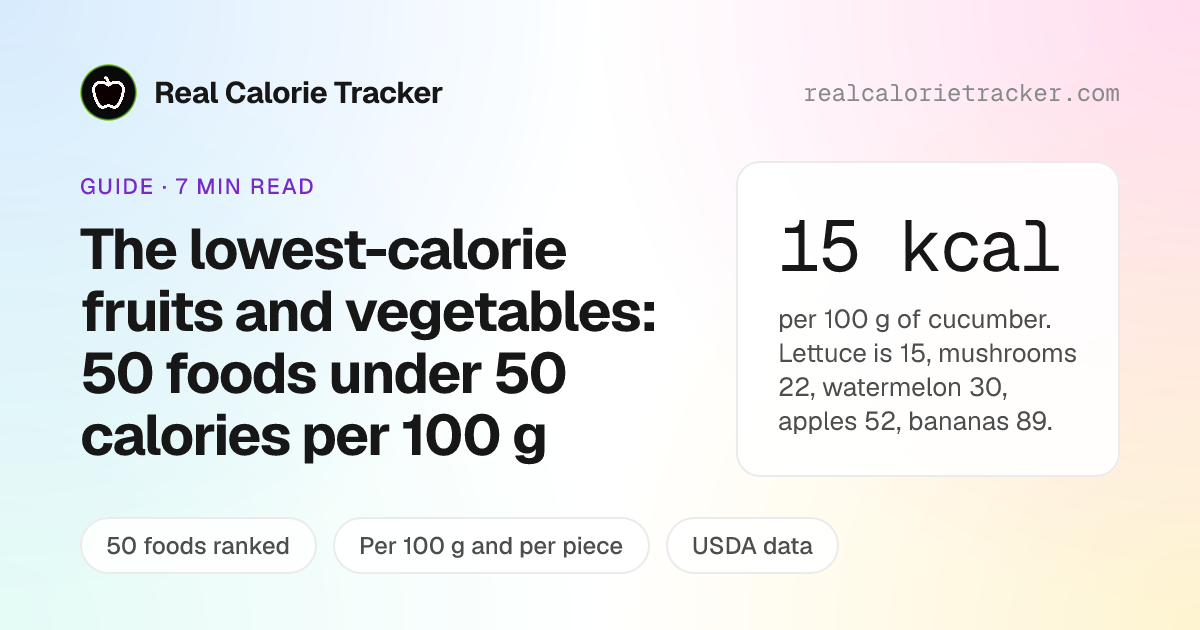
Fruit and vegetables are how you eat a big plate on a calorie budget. But they are not all the same: a cup of cucumber is 8 calories and a cup of grapes is 104, and an avocado has more calories than a slice of pizza. Here is where everything sits, so you can fill up on the cheap end and keep the expensive end as a treat.
All figures are USDA values for the raw food, from the food database. Each links to a page with full nutrition and more portion sizes.
Vegetables, lightest first
| Vegetable | Per 100 g | A typical portion |
|---|---|---|
| Cucumber | 15 kcal | ½ cup sliced: 8 kcal |
| Lettuce | 15 kcal | 1 cup shredded: 7 kcal |
| Celery | 16 kcal | 1 stalk: 6 kcal |
| Radishes | 16 kcal | 10 radishes: 7 kcal |
| Zucchini / courgette | 17 kcal | 1 medium: 33 kcal |
| Romaine lettuce | 17 kcal | 2 cups: 16 kcal |
| Tomato | 18 kcal | 1 medium: 22 kcal |
| Swiss chard | 19 kcal | 1 cup: 7 kcal |
| Asparagus | 20 kcal | 1 cup: 27 kcal |
| Mushrooms | 22 kcal | 1 cup sliced: 15 kcal |
| Spinach | 23 kcal | 1 cup raw: 7 kcal |
| Cauliflower | 25 kcal | 1 cup: 27 kcal |
| Cabbage | 25 kcal | 1 cup shredded: 22 kcal |
| Eggplant / aubergine | 25 kcal | 1 cup cubed: 21 kcal |
| Pumpkin | 26 kcal | 1 cup cubed: 30 kcal |
| Bell pepper | 31 kcal | 1 medium: 37 kcal |
| Green beans | 31 kcal | 1 cup: 31 kcal |
| Okra | 33 kcal | 1 cup: 33 kcal |
| Broccoli | 34 kcal | 1 cup chopped: 31 kcal |
| Onion | 40 kcal | 1 medium: 44 kcal |
| Carrot | 41 kcal | 1 medium: 25 kcal |
| Beetroot | 43 kcal | 1 beet: 35 kcal |
| Brussels sprouts | 43 kcal | 1 cup: 38 kcal |
| Kale | 49 kcal | 1 cup chopped: 33 kcal |
| Green peas | 81 kcal | 1 cup: 117 kcal |
| Sweet corn | 86 kcal | 1 ear: 77 kcal |
| Potato, boiled | 87 kcal | 1 medium: 145 kcal |
| Sweet potato, baked | 90 kcal | 1 medium: 103 kcal |
Everything above the onion is under 40 calories per 100 g, which in practice means you cannot eat enough of it to matter. A whole cucumber, a whole head of lettuce and a pound of mushrooms together are about 170 calories. Peas, corn and potatoes are starches, not “vegetables” in the calorie sense, and belong with rice and bread in your mental budget.
Fruit, lightest first
| Fruit | Per 100 g | A typical portion |
|---|---|---|
| Rhubarb | 21 kcal | 1 cup diced: 26 kcal |
| Lemon | 29 kcal | 1 fruit: 17 kcal |
| Lime | 30 kcal | 1 fruit: 20 kcal |
| Watermelon | 30 kcal | 1 cup diced: 46 kcal |
| Strawberries | 32 kcal | 1 cup: 49 kcal |
| Cantaloupe | 34 kcal | 1 cup cubed: 54 kcal |
| Honeydew melon | 36 kcal | 1 cup: 61 kcal |
| Peach | 39 kcal | 1 medium: 59 kcal |
| Grapefruit | 42 kcal | ½ fruit: 52 kcal |
| Blackberries | 43 kcal | 1 cup: 62 kcal |
| Papaya | 43 kcal | 1 cup cubed: 62 kcal |
| Plum | 46 kcal | 1 fruit: 30 kcal |
| Orange | 47 kcal | 1 medium: 62 kcal (by size) |
| Apricot | 48 kcal | 1 fruit: 17 kcal |
| Pineapple | 50 kcal | 1 cup chunks: 83 kcal |
| Apple | 52 kcal | 1 medium: 95 kcal |
| Raspberries | 52 kcal | 1 cup: 64 kcal |
| Blueberries | 57 kcal | 1 cup: 84 kcal |
| Pear | 57 kcal | 1 medium: 101 kcal |
| Mango | 60 kcal | 1 cup sliced: 99 kcal |
| Kiwi | 61 kcal | 1 fruit: 42 kcal |
| Cherries | 63 kcal | 1 cup: 97 kcal |
| Guava | 68 kcal | 1 fruit: 37 kcal |
| Grapes | 69 kcal | 1 cup: 104 kcal |
| Pomegranate | 83 kcal | ½ cup arils: 72 kcal |
| Banana | 89 kcal | 1 medium: 105 kcal |
| Avocado | 160 kcal | ½ avocado: 109 kcal |
| Dates | 277 kcal | 1 Medjool: 66 kcal |
| Raisins | 299 kcal | 1 small box: 129 kcal |
Fruit runs 30 to 90 calories per 100 g, so a piece of fruit is 50 to 100 calories almost regardless of which one you pick. The exceptions are the fatty avocado (half a Hass is 114 calories; calories in an avocado has every size and variety) and dried fruit, where removing the water leaves a food five times denser than the fresh version. A handful of raisins is a banana and a half. Apples sit in the middle at 52 per 100 g, and size is what moves them: calories in an apple runs from 53 for an extra-small to 116 for a large. (Calories in a banana has every size, and why IFCT lists Indian varieties 15 to 25 percent higher.)
How to use this
Fill half the plate from the top of the vegetable list. Salad leaves, cucumber, tomato, mushrooms, courgette, cabbage, cauliflower, broccoli. This is the core trick of every volume-eating approach, and the numbers show why it works: 300 g of those vegetables is about 70 calories, and it is a lot of food. Most of it also comes with fibre, which is another thing most people undereat.
Mind the cooking, not the vegetable. The table is for raw food. Vegetables do not gain calories when cooked, but they absorb whatever you cook them in. A tablespoon of oil is 120 calories, which is more than a cup of any vegetable on the list. Roasting, steaming, stir-frying with a spray of oil and cooking in a sauce all keep the numbers close to raw; deep frying and buttery sautés do not. Weigh raw where you can; cooked weights are different.
Fruit is fine, in pieces. Two or three pieces of fruit a day is 150 to 300 calories and worth it. Where fruit calories get out of hand is in juice (a glass of orange juice is three oranges with the fibre removed), smoothies (a banana, mango, dates and juice blend is easily 400), and dried fruit by the handful.
Berries, melon and citrus are the lightest fruits per bite. If you eat fruit by the bowl rather than the piece, strawberries (49 calories a cup), watermelon, cantaloupe, grapefruit and oranges give the most volume per calorie. Grapes, cherries and bananas are the easiest to overeat; calories in grapes has them per grape, and Indian black seedless grapes run 36 percent above the generic entry.
Starchy vegetables are carbs. Potato, sweet potato, corn and peas are good foods, but at 80 to 90 calories per 100 g they are closer to rice (130) than to broccoli (34). Count them as your starch, not as your vegetables.
Low-calorie, high-protein vegetables
A few vegetables carry useful protein for their calories: spinach (2.9 g per 23 kcal), mushrooms (3.1 g per 22), asparagus (2.2 g per 20), broccoli (2.8 g per 34), kale (4.3 g per 49) and green peas (5.4 g per 81). None of them replace a protein source, but across a day of big vegetable portions they add 10 to 15 g. For actual protein sources, see the highest-protein foods per calorie.
Log by weight for the first week, then by cup or piece once you can eyeball it. The tracker has cup, piece and gram portions for all of the foods above, and the vegetables and fruit group pages list several hundred more.
Written by Sheeraz Ali
Sheeraz builds Real Calorie Tracker and uses it every day. The guides come from his own food tracking and from the IFCT 2017, INDB and USDA data behind the site, with sources linked in the text.
Put it into practice
Log your first meal by grams or by serving. Free, no account needed.
More guides
- What 1,200 calories looks like: two real days, and who should not eat it
Two full 1,200-calorie days, Western (131 g protein) and Indian veg (68 g), item by item. Plus the maths on who 1,200 suits and why most men should skip it.
- What 1,500 calories looks like in a day: three real menus
Three full days at 1,500 calories, Western, Indian vegetarian and Indian non-veg, meal by meal with calories and protein for every item. Plus how to tell whether 1,500 is the right number for you.
- What 1,800 calories looks like: three real days, and who it is a diet for
Three full 1,800-calorie days, home-cooked (137 g protein), a bought-lunch workday and Indian veg, item by item. Plus who 1,800 makes lose weight and who it makes gain.