Calories in pulao: veg, matar, jeera, chana and chicken, per plate and per cup
A real plate of veg pulao is 450 to 520 calories, not the 200 most sites quote. Plain pulao is 434 for 310 g, peanut pulao 695. Eleven pulaos, weighed, inside.
By Sheeraz Ali · Published November 6, 2026 · 7 min read
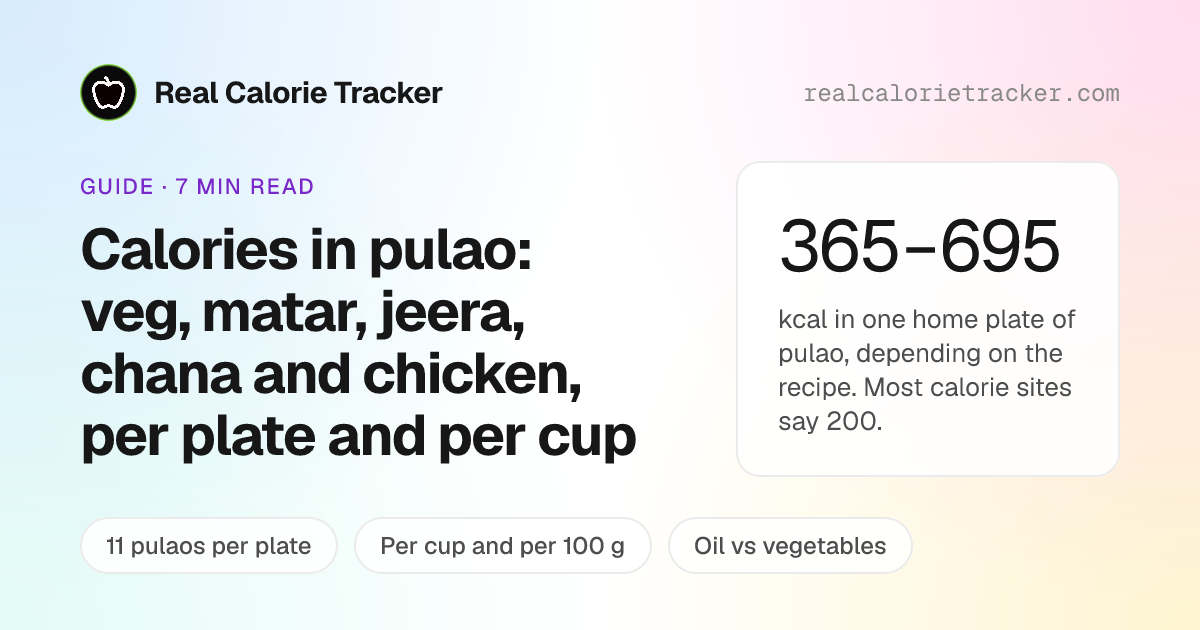
A home plate of veg pulao is about 450 to 520 calories. Plain pulao is 434 for a 310 g plate, matar pulao 512 for 470 g, jeera pulao 365 for 270 g, and peanut pulao tops the list at 695. Per 100 g, most pulaos are 110 to 140 calories, which is close to plain boiled rice. The pulao itself is not the problem. The plate is.
Search for pulao calories and you will mostly find “about 200 calories per serving”. That number is true for a single cup, about 150 g, which is half of what anyone serves themselves at dinner. The figures below come from the Indian Nutrient Databank, which cooks each dish from a standard recipe and weighs the plate it is served on, so the portions are real household portions. Raw ingredient values are from IFCT 2017. Every pulao links to its page in the Indian food database.
Calories in pulao, per plate
| Pulao | Plate weight | Calories per plate | Protein | Fat | Per 100 g |
|---|---|---|---|---|---|
| Jeera (cumin) pulao | 270 g | 365 | 6.8 g | 8.6 g | 135 |
| Plain pulao | 310 g | 434 | 7.1 g | 14.3 g | 140 |
| Mushroom pulao | 360 g | 446 | 9.0 g | 14.4 g | 124 |
| Sprouted moong pulao | 410 g | 463 | 9.0 g | 14.8 g | 113 |
| Navratan pulao | 185 g | 485 | 11.5 g | 17.6 g | 262 |
| Mixed vegetable pulao | 440 g | 497 | 11.9 g | 14.5 g | 113 |
| Kala chana pulao | 395 g | 498 | 13.4 g | 10.3 g | 126 |
| Matar (peas) pulao | 470 g | 512 | 18.3 g | 8.9 g | 109 |
| Chana dal and vegetable pulao | 440 g | 515 | 15.8 g | 10.1 g | 117 |
| Hara chana (green chickpea) pulao | 360 g | 623 | 17.6 g | 17.3 g | 173 |
| Peanut pulao | 360 g | 695 | 19.1 g | 34.2 g | 193 |
Two numbers in that table surprise people. Matar pulao is the best plate on the list: more protein than any pulao except peanut, less fat than any except jeera, and the lowest calories per 100 g, because peas are mostly water and bulk out the rice without adding much energy. And navratan pulao packs 485 calories into a plate barely half the size of the others, because the dried fruit, nuts and cream that make it festive are the densest things you can put in rice. Spoon for spoon it is 2.4 times as heavy as matar pulao.
Peanut pulao is the trap. It sounds like a sensible weeknight dish, but 34 g of fat on one plate is more than the 27 g of oil that ICMR-NIN’s My Plate for the Day budgets for an entire 2,000-calorie day. Much of that is the peanuts themselves, not the tadka.
Per cup, next to the other rice dishes
If you serve yourself with a cup or a katori rather than a plate, this is the table to use. A level cup of cooked rice dishes weighs about 150 g.
| Rice dish | Per cup (150 g) | Protein | Where the extra calories come from |
|---|---|---|---|
| Boiled rice | 176 | 3.9 g | Nothing added |
| Matar pulao | 164 | 5.8 g | Peas dilute the rice; little oil |
| Mixed vegetable pulao | 170 | 4.1 g | 1 to 2 tsp oil per plate’s worth |
| Jeera pulao | 203 | 3.8 g | Ghee for the jeera tadka |
| Plain pulao | 210 | 3.4 g | More ghee, no vegetables to dilute it |
| Veg biryani | 263 | 4.8 g | Fried onions, layered oil |
| Lemon rice | 264 | 6.4 g | Peanuts and a heavy tadka |
| Peanut pulao | 290 | 7.9 g | Peanuts |
A cup of vegetable pulao is fewer calories than a cup of plain boiled rice. That is not a typo. INDB’s boiled rice is 117 calories per 100 g, and a pulao bulked out with peas and carrots can come in under it even after the oil goes in. Our own veg pulao entry, a richer restaurant-style recipe, is 150 per 100 g, or 225 a cup, so the gap depends on the cook. Pulao is still a reasonable choice inside a calorie target; the biryani guide shows why biryani, with its fried onions and layered fat, runs 50 to 100 calories a cup higher.
Why the numbers look like this
Rice sets the floor, fat sets the ceiling. Raw rice is 356 calories per 100 g (IFCT) and roughly triples in weight when it cooks, which lands cooked rice at 117 to 130 per 100 g. Everything above that is fat or a dense add-in. The 30 percent of calories from fat in plain pulao is almost all ghee: 14 g on the plate is three teaspoons.
Vegetables pull it down. Peas, carrots, beans and cauliflower are 25 to 80 calories per 100 g and replace rice gram for gram on the plate. This is why the vegetable-heavy pulaos weigh 400 g or more per plate and still land within 100 calories of the 310 g plain one.
Nuts, dried fruit and cream push it up fast. Cashews and raisins in a pulao are a garnish by volume and a main ingredient by calories: 20 g of cashews is about 110 calories on its own. That is the entire difference between navratan and everything else.
A homemade pot, ingredient by ingredient
Because every family’s pulao is different, it is worth knowing how to work it out yourself. This is an estimate for a typical matar-gajar pulao for four, built from raw values in our database:
| Ingredient | Amount | Calories | Protein |
|---|---|---|---|
| Rice, raw | 300 g (1½ cups) | 1,068 | 23.7 g |
| Ghee or oil | 2 tbsp (28 g) | 252 | 0 g |
| Green peas | 150 g (1 cup) | 122 | 8.1 g |
| Carrot | 100 g | 41 | 0.9 g |
| Onion | 100 g (1 medium) | 40 | 1.1 g |
| Whole spices, salt, water | ≈ 0 | ||
| Whole pot (about 1.1 kg cooked) | ≈ 1,520 | ≈ 34 g | |
| One quarter (about 280 g) | ≈ 380 | ≈ 8.5 g |
The lever here is the ghee. Each extra tablespoon in the pot adds 126 calories, or about 32 per serving, and you cannot see it in the finished rice. I measure the ghee into the pan with a spoon rather than pouring, and I weigh the cooked pot once so I can log my portion by weight; the cooked vs raw weights guide explains why weighing the cooked pot and dividing is more accurate than guessing cups.
Restaurant pulao is a different dish: more ghee, often cashews and fried onions on top. I log it as plain pulao by weight plus 100 calories, a rule of thumb rather than a measurement.
Chicken and mutton pulao: a data warning
INDB has chicken pulao at 108 calories per 100 g and mutton pulao at 131, but in both recipes over 70 percent of the calories come from fat and there are only 11 g of carbohydrate per 100 g. That is a meat-heavy, low-rice recipe, not the rice-led pulao most people make, and it has no plate weight attached. For a typical home chicken pulao, I would count it like chicken biryani, at about 165 calories per 100 g and 495 for a 300 g plate. That is an estimate from the closest dish we have, labelled as one. Yakhni pulao, where the rice cooks in meat stock, is not in the database at all; treat it the same way.
Making a pulao plate work in a deficit
- Serve 250 g of matar or mixed vegetable pulao (about 275 calories) instead of 400 g, and fill the rest of the plate with a katori of raita (60) and a katori of dal (174). That is about 505 calories with 23 g of protein, against about 560 calories and 9 g of protein for a 400 g plate of plain pulao on its own.
- Add a pulse to the pot. Kala chana and chana dal pulaos land at 13 to 16 g of protein per plate, about double plain pulao, for 60 to 80 more calories.
- Treat navratan and peanut pulao as festival food. One plate of either is the oil and nuts of a whole day.
Log your plate by weight in the tracker, which has household portions for every pulao above. To see how a pulao dinner fits your day, the calorie deficit calculator gives you a target, and the calories in a thali guide shows what the rest of an Indian meal adds.
Written by Sheeraz Ali
Sheeraz builds Real Calorie Tracker and uses it every day. The guides come from his own food tracking and from the IFCT 2017, INDB and USDA data behind the site, with sources linked in the text.
Put it into practice
Log your first meal by grams or by serving. Free, no account needed.
More guides
- What 1,200 calories looks like: two real days, and who should not eat it
Two full 1,200-calorie days, Western (131 g protein) and Indian veg (68 g), item by item. Plus the maths on who 1,200 suits and why most men should skip it.
- What 1,500 calories looks like in a day: three real menus
Three full days at 1,500 calories, Western, Indian vegetarian and Indian non-veg, meal by meal with calories and protein for every item. Plus how to tell whether 1,500 is the right number for you.
- What 1,800 calories looks like: three real days, and who it is a diet for
Three full 1,800-calorie days, home-cooked (137 g protein), a bought-lunch workday and Indian veg, item by item. Plus who 1,800 makes lose weight and who it makes gain.