Christmas dinner calories: every trimming per portion, and what a full plate adds up to
A full Christmas dinner plate is about 1,336 calories, 2,070 with pudding and wine. Turkey, roast potatoes, pigs in blankets and every trimming, from UK data.
By Sheeraz Ali · Published November 19, 2026 · 8 min read
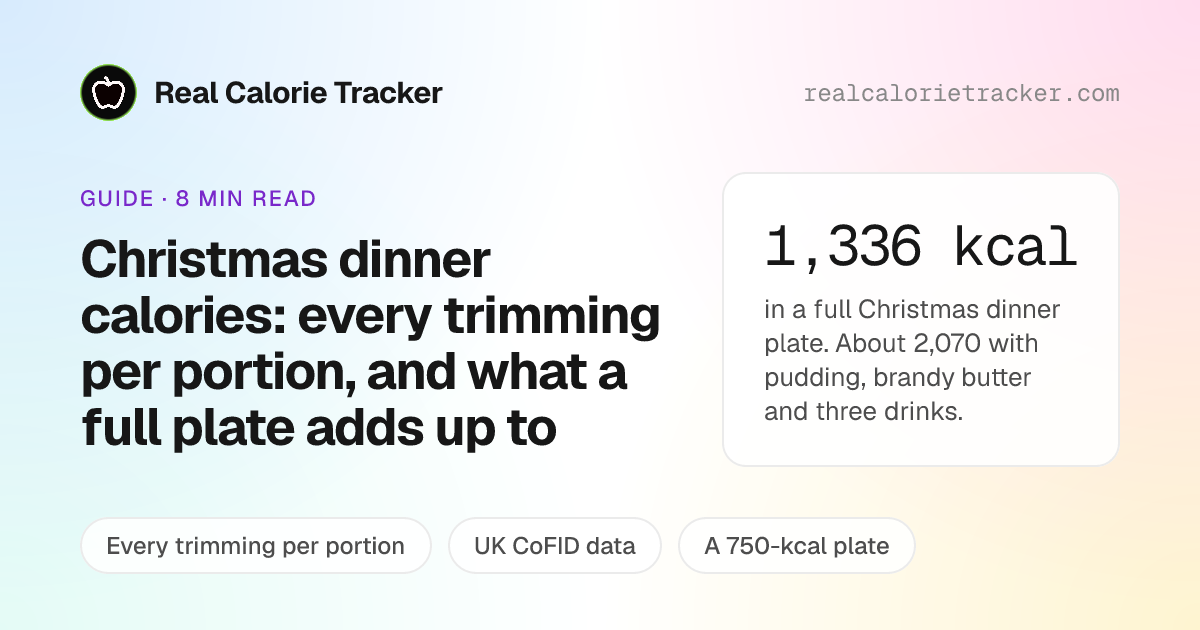
A full Christmas dinner plate (turkey with skin, four roast potatoes, three pigs in blankets, two stuffing balls, a Yorkshire pudding, roast parsnips, sprouts, carrots, red cabbage, bread sauce, gravy and cranberry sauce) comes to about 1,336 calories and 70 g of protein. Add a portion of Christmas pudding with brandy butter, two glasses of red wine and a glass of fizz and the meal is about 2,070.
The number you will see in December headlines is 6,000 calories for the whole of Christmas Day. It traces back to a 2016 survey by Wren Kitchens, a kitchen retailer, and it is a survey of what people said they ate, not a measurement. Further down I add up a realistic day from breakfast to the last chocolate, and it lands well short of that.
Every value here is per 100 g from McCance and Widdowson’s Composition of Foods Integrated Dataset (CoFID 2021), the UK government’s food composition table, multiplied out to a portion. The portion weights are mine: what a normal adult plate looks like when you put each thing on a kitchen scale. Where we have the food in our database, it is linked.
The meat
| Roast meat (CoFID) | Portion | Calories | Protein |
|---|---|---|---|
| Turkey, light meat, roasted, no skin | 140 g | 214 | 47 g |
| Turkey, dark meat, roasted, no skin | 140 g | 248 | 41 g |
| Turkey, light and dark meat with skin | 140 g | 266 | 43 g |
| Turkey skin, roasted until dry | 20 g | 96 | 6 g |
| Gammon joint, boiled (a ham alternative) | 100 g | 204 | 23 g |
140 g is three good slices of breast plus a piece of leg, which is what most people carve for themselves. CoFID’s roast turkey is almost identical to USDA’s per 100 g; the numbers here sit below my Thanksgiving dinner calories guide only because a British plate usually carries 140 g of turkey, not 170.
The skin is the only part of the turkey worth thinking about. Roasted until crisp it is 481 calories per 100 g, more than three times the breast meat, so a 20 g curl of it costs as much as a roast potato. Turkey breast is the best-value food on the table: 22 g of protein for every 100 calories, which puts it near the top of the highest-protein foods per calorie.
The trimmings, per portion
| Trimming (CoFID unless stated) | Portion | Calories | Per 100 g |
|---|---|---|---|
| Roast potatoes, parboiled and roasted in oil | 4 pieces (200 g) | 322 | 161 |
| Stuffing, sage and onion, homemade | 2 balls (70 g) | 177 | 253 |
| Pigs in blankets (Tesco 12-pack label) | 3 (16 g each, cooked) | 144 | about 300 |
| Parsnips, roasted in rapeseed oil | 80 g | 126 | 158 |
| Yorkshire pudding, whole milk, homemade | 1 (about 35 g) | 74 | 211 |
| Stuffing from a packet mix, made up | 2 balls (70 g) | 68 | 97 |
| Bread sauce, whole milk | 3 tbsp (50 g) | 54 | 108 |
| Cranberry sauce (USDA FDC 173961) | 2 tbsp (30 g) | 48 | 159 |
| Red cabbage cooked with apple | 80 g | 46 | 57 |
| Gravy from granules, made up | 100 ml | 30 | 30 |
| Brussels sprouts, boiled | 8 sprouts (80 g) | 26 | 32 |
| Carrots, boiled | 80 g | 23 | 29 |
Roast potatoes are the biggest item on the plate after the turkey, and it is not close. The potato itself is cheap: boiled, it would be about half the calories. Roasting takes away water and adds fat to the outside, so CoFID’s roasted potato is 161 per 100 g with 5.7 g of fat. That figure is for potatoes roasted in a normal amount of oil. If yours sit in a tray of goose fat and come out glossy, count them higher.
Parsnips do the same thing. Boiled, 80 g is 53 calories. Roasted, the same 80 g is 126, more than double, because the cut pieces shrink as they lose water and soak up oil. Of all the vegetables on the plate, the roast parsnips are the only ones that behave like a starch.
The stuffing gap is the one most people don’t expect. Homemade sage and onion stuffing is 253 calories per 100 g, because it is breadcrumbs bound with butter or sausage fat. A packet mix made up with boiling water is 97. The dry mix is 338 per 100 g, but it absorbs about two and a half times its weight in water and nothing else. If you want stuffing and want it cheaper, the packet is the better option, and nobody at the table will be measuring.
Pigs in blankets cost less than their reputation. Tesco’s 12-pack lists 45 to 50 calories per pig, which matches what CoFID’s grilled pork sausage and streaky bacon add up to for a chipolata that weighs about 16 g cooked. Three are 144. The problem is that they are passed around twice.
Sprouts, carrots and red cabbage together are under 100 calories. Gravy from granules is 30 per 100 ml because it is mostly water. Meat-juice gravy with the fat skimmed off is in the same range; unskimmed, it isn’t.
Pudding, mince pies and the cheese board
| Dessert (CoFID unless stated) | Portion | Calories |
|---|---|---|
| Christmas pudding, homemade | 100 g (⅛ of an 800 g pudding) | 316 |
| Christmas pudding, shop-bought | 100 g | 285 |
| Brandy butter (estimate, see below) | 1 tbsp (15 g) | 76 |
| Custard, made with whole milk | 120 g | 137 |
| Custard, ready-made carton | 120 g | 118 |
| Double cream (heavy cream) | 2 tbsp (30 g) | 149 |
| Mince pie, homemade | 1 (60 g) | 262 |
| Mince pie, shop-bought | 1 (61 g) | 230 |
| Trifle, homemade | 150 g bowl | 250 |
| Christmas cake, rich fruit with marzipan and icing | 70 g slice | 248 |
| Cheddar | 30 g | 125 |
| Stilton | 30 g | 123 |
| Brie | 30 g | 103 |
| Cream crackers | 3 (24 g) | 107 |
| Milk chocolate, from the tin | 50 g | 260 |
CoFID has no brandy butter row, so that figure is built from a standard recipe: 100 g butter, 100 g sugar and 3 tbsp brandy make about 240 g at roughly 507 calories per 100 g. One tablespoon is 76. Double cream is twice that per spoonful. Custard is the lightest thing to pour on pudding: 120 g is 137 calories and carries 5 g of protein, where the same weight of double cream would be 595.
The shop mince pie figure agrees with the label. Premier Foods’ specification sheet for Mr Kipling mince pies gives 238 calories for a 61 g pie. Homemade ones run higher because home shortcrust uses more butter than a factory pie does. One shop mince pie is nearly double the sprouts, carrots, red cabbage and gravy on the plate combined (125). Shortbread and gingerbread are lighter per piece only because they are smaller; Christmas cookie calories has them per cookie.
Christmas pudding at 285 to 316 per portion is lighter than its reputation, too. It is dense with dried fruit, so most of the calories are sugar, not fat (CoFID’s shop-bought pudding is 6.9 g of fat per 100 g). The richest thing you can do to it is pour on cream. For a slice of the cake as well, calories in plum cake has fruit cake by weight from a thin finger to a whole loaf.
What the plate and the day add up to
| Full plate | Lighter plate | |
|---|---|---|
| Turkey, 140 g | 266 (with skin) | 214 (breast, no skin) |
| Roast potatoes | 322 (4) | 161 (2) |
| Pigs in blankets | 144 (3) | 48 (1) |
| Stuffing | 177 (2 homemade balls) | 89 (1) |
| Yorkshire pudding | 74 | 0 |
| Roast parsnips | 126 (80 g) | 63 (40 g) |
| Sprouts, carrots, red cabbage | 95 (80 g each) | 119 (120 g sprouts and carrots, 80 g cabbage) |
| Bread sauce | 54 | 0 |
| Gravy and cranberry sauce | 78 | 54 |
| Plate | 1,336 kcal, 70 g protein | 748 kcal, 60 g protein |
The lighter plate keeps every item that matters to most people (turkey, roast potatoes, a pig in blanket, stuffing) and loses 587 calories. It does that by halving the four roasted things and keeping the boiled vegetables at full portions. The turkey portion is the same weight, so protein drops by only 10 g. That’s the version I put on my own plate: full turkey, half of everything roasted, as many sprouts as I want.
For the whole day, here is a generous but believable Christmas Day:
| When | What | Calories |
|---|---|---|
| Breakfast | 50 g smoked salmon, 2 scrambled eggs, 1 tsp butter | 271 |
| Dinner | The full plate above | 1,336 |
| Pudding | 100 g shop-bought pudding, 1 tbsp brandy butter | 361 |
| Drinks with dinner | 2 × 175 ml red wine, 1 × 125 ml sparkling wine | 371 |
| Afternoon | 2 shop-bought mince pies | 460 |
| Evening | Cheddar and Stilton (30 g each), 3 crackers | 355 |
| Through the day | 50 g chocolates, 1 × 50 ml Baileys | 422 |
| Total | 3,576 |
That is a big day: roughly 1,500 to 2,000 calories above what most adults burn. It is still 2,400 short of the 6,000 headline. To get there you would need a second full plate with pudding and another six mince pies.
Drinks are 15 to 20 percent of the day without anyone noticing. A 175 ml glass of red is 133, a 150 ml glass of homemade mulled wine is 232 (CoFID’s recipe has 20 g of sugar per 100 g), and a 50 ml Baileys is 162. Port is the cheap one at about 80 for a 50 ml glass, because the pour is small. Calories in alcohol has every pour size.
Does one Christmas dinner put weight on
A kilogram of body fat stores roughly 7,700 calories, so a day 2,000 calories over maintenance adds about a quarter of a kilo. The jump of 1 to 2 kg on Boxing Day morning is mostly food still in transit plus water. Salty gravy, stuffing and ham make you hold water, and the extra carbohydrate refills muscle glycogen, which is stored with three to four grams of water per gram (Kreitzman et al., 1992). It goes again in a few days of normal eating. The calorie deficit guide explains why the scale lies for a week after a day like this.
What adds up is the six weeks around it. The UK Winter Weight Watch Study (Mason et al., BMJ, 2018) randomised 272 adults in November and December and weighed them again in January or February. The comparison group gained an average of 0.37 kg. The group asked to weigh themselves regularly, given weight-management tips and shown how long a walk each festive food would take to burn off ended up 0.49 kg lighter than the comparison group. Half a kilo is not dramatic, but it is the whole holiday gain, and the method was mostly paying attention.
Logging it without a scale
You don’t need to weigh anything at a family table. Log turkey as three slices of breast, about 150 to 200 calories depending on skin; roast potatoes at 80 each; pigs in blankets at 50 each; mince pies at 230 to 260; and the boiled vegetables at zero if you want to keep it quick, because the error is under 100. Rounded numbers are fine. A log that is 15 percent out is still far better than none, and how to count calories accurately covers the habits that keep it that close.
On the day, eat a protein-heavy breakfast, skip the “saving up” (it usually turns into an extra mince pie by 3 pm), and walk after dinner. A mile at an easy pace burns about 50 to 115 net calories depending on your weight, so calories burned walking a mile will tell you that it covers about one pig in blanket. Go back to normal on the 27th. The tracker logs the plate in a couple of minutes, and the TDEE calculator tells you what a normal day should be.
This guide is general nutrition information, not medical advice. If you have diabetes or another condition that affects how you plan a large meal, ask your doctor or dietitian.
This guide is general information, not medical advice. If you're pregnant, have a medical condition or take medication, talk to a doctor or registered dietitian before changing how you eat.
Written by Sheeraz Ali
Sheeraz builds Real Calorie Tracker and uses it every day. The guides come from his own food tracking and from the IFCT 2017, INDB and USDA data behind the site, with sources linked in the text.
Put it into practice
Log your first meal by grams or by serving. Free, no account needed.
More guides
- What 1,200 calories looks like: two real days, and who should not eat it
Two full 1,200-calorie days, Western (131 g protein) and Indian veg (68 g), item by item. Plus the maths on who 1,200 suits and why most men should skip it.
- What 1,500 calories looks like in a day: three real menus
Three full days at 1,500 calories, Western, Indian vegetarian and Indian non-veg, meal by meal with calories and protein for every item. Plus how to tell whether 1,500 is the right number for you.
- What 1,800 calories looks like: three real days, and who it is a diet for
Three full 1,800-calorie days, home-cooked (137 g protein), a bought-lunch workday and Indian veg, item by item. Plus who 1,800 makes lose weight and who it makes gain.