Thanksgiving dinner calories: every dish per serving, and what a full plate adds up to
A full Thanksgiving plate is about 1,600 calories, and 2,200 with pie and two glasses of wine. Turkey, stuffing, sides and pies per serving, from USDA data.
By Sheeraz Ali · Published November 14, 2026 · 8 min read
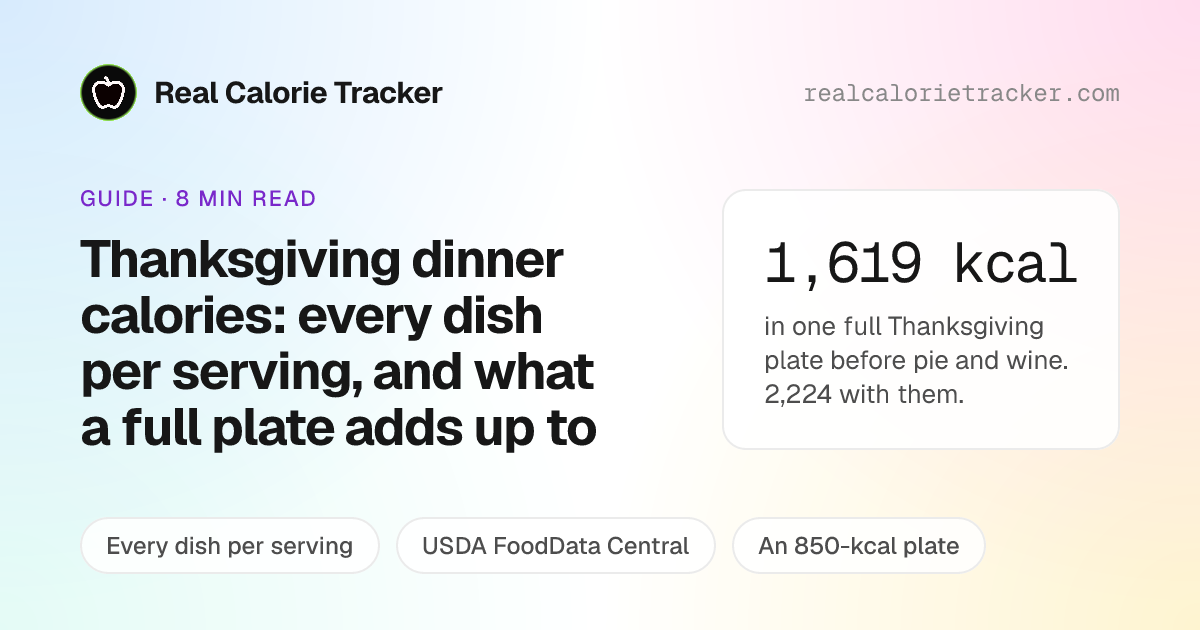
One full Thanksgiving plate (6 oz of turkey with skin, a cup each of mashed potatoes, stuffing, green bean casserole and sweet potato casserole, gravy, cranberry sauce and a buttered roll) comes to about 1,619 calories. Add a slice of pumpkin pie with whipped cream and two glasses of wine and it is 2,224. That is one sitting, no seconds, no appetizers.
The 3,000 and 4,500 figures you see repeated every November are not measurements. The 3,000 comes from a 2006 American Council on Exercise press release that gives no method, and the 4,500 is that same release’s guess at the whole day once you add grazing. They are plausible for a big eater on a long day. They are not what your plate weighs.
The numbers below are per serving, from USDA FoodData Central (SR Legacy and the FNDDS survey database, with the FDC ID so you can check each one) and from our food database where we have the item.
The turkey: light, dark and the skin
| Turkey, roasted | Portion | Calories | Protein |
|---|---|---|---|
| Breast, no skin | 6 oz (170 g) | 230 | 51 g |
| Light meat with skin (FDC 171089) | 6 oz (170 g) | 301 | 50 g |
| Dark meat, no skin (FDC 171091) | 6 oz (170 g) | 294 | 47 g |
| Dark meat with skin (FDC 171489) | 6 oz (170 g) | 350 | 46 g |
| Mixed light and dark, with skin (FDC 171479) | 6 oz (170 g) | 321 | 49 g |
| Skin only (FDC 171082) | 1 oz (28 g) | 129 | 7 g |
Six ounces is a generous carving, about the size of two decks of cards. The gap between the leanest and fattiest choice is 120 calories, and almost all of it is the skin, which is 459 calories per 100 g and 77 percent fat by energy. Dark meat without skin is only 64 calories above breast for the same weight. If you prefer the thigh, eat the thigh and leave the skin.
Turkey is the best food on the table by a distance. Breast meat gives 22 g of protein per 100 calories, near the top of the highest-protein foods per calorie, and it is the only dish on the plate that fills you up for what it costs.
The sides, per serving
| Side | Portion | Calories | Protein |
|---|---|---|---|
| Stuffing, from a boxed mix (FDC 174931) | 1 cup (200 g) | 390 | 5.5 g |
| Mac and cheese | 1 cup (200 g) | 328 | 13.4 g |
| Sweet potato casserole (FNDDS 2709708) | 1 cup (250 g) | 248 | 4.7 g |
| Mashed potatoes, whole milk and butter (FDC 168555) | 1 cup (210 g) | 237 | 3.9 g |
| Candied sweet potatoes (FDC 170088) | 1 piece (105 g) | 172 | 0.9 g |
| Corn | 1 cup (154 g) | 132 | 4.9 g |
| Green bean casserole (FNDDS 2710040) | 1 cup (230 g) | 129 | 4.5 g |
| Dinner roll (FDC 172793) + 1 tsp butter | 1 roll (28 g) | 123 | 3.1 g |
| Cranberry sauce, canned (FDC 173961) | ¼ cup (69 g) | 110 | 0.6 g |
| Sweet potato, baked, plain | 1 medium (114 g) | 103 | 2.3 g |
| Turkey gravy (FDC 171568) | ½ cup (119 g) | 61 | 3.1 g |
| Green beans, plain | 1 cup (100 g) | 31 | 1.8 g |
Stuffing wins the calorie contest by a wide margin. It is bread, so it starts dense, and then it soaks up butter and drippings; USDA’s prepared mix is 12 percent fat by weight. Homemade stuffing with sausage will be higher than the boxed figure, not lower, so treat 390 a cup as the floor.
Gravy is the surprise in the other direction. Half a cup of turkey gravy is 61 calories because it is mostly stock thickened with flour. Pan gravy made with a lot of drippings is richer, but even doubled it is not where the calories are. Pour it on the turkey and the potatoes and stop worrying about it.
The green bean casserole figure needs a warning. The FNDDS recipe is 56 calories per 100 g, which is a light version. The classic one with a can of cream of mushroom soup and a thick layer of fried onions on top will be meaningfully higher, and I could not find a USDA entry for that exact recipe. If yours has a crust of onions, log it at double.
Cranberry sauce is 110 calories for a quarter cup, nearly all of it sugar. Raw cranberries are 46 per 100 g; the canned sauce is 159. That is the cost of the sugar it takes to make a sour berry edible.
Pie, cream and drinks
| Dessert or drink | Portion | Calories |
|---|---|---|
| Pecan pie, store-bought (FDC 175021) | 1 slice (133 g) | 541 |
| Pecan pie, homemade (FDC 172786) | ⅛ of a 9” pie (122 g) | 503 |
| Pumpkin pie, store-bought (FDC 172787) | 1 slice (133 g) | 323 |
| Pumpkin pie, homemade (FDC 172788) | ⅛ of a 9” pie (155 g) | 316 |
| Apple pie, store-bought (FDC 175011) | ⅛ of a 9” pie (125 g) | 296 |
| Whipped cream, aerosol (FDC 170860) | ¼ cup (15 g) | 39 |
| Eggnog | 1 cup (250 g) | 220 |
| Beer | 12 oz can | 153 |
| Red wine | 5 oz glass | 125 |
| White wine | 5 oz glass | 121 |
Pecan pie is the heaviest single item at the whole meal: one slice is more than a cup of stuffing. The reason is the filling, which is corn syrup, sugar, butter and eggs, topped with pecans at 691 calories per 100 g. Pumpkin pie is a custard of mostly pumpkin, milk and eggs, so the same-size slice is about 200 calories lighter. If you want one slice of something, pumpkin is the cheap one. If you want pecan, have a thin slice and skip the cream, which barely matters anyway at 39 calories.
Drinks are where an evening quietly adds 400 to 600 calories. Three glasses of wine across a long dinner is 375; two cups of eggnog is 440. None of it fills you up. Pours at a long dinner also tend to grow, and calories in alcohol shows what a 250 ml glass or a craft beer at 7% really costs.
What a plate adds up to
| Full plate | Lighter plate | |
|---|---|---|
| Turkey, 6 oz | 321 (with skin) | 230 (breast, no skin) |
| Mashed potatoes | 237 (1 cup) | 118 (½ cup) |
| Gravy | 61 (½ cup) | 31 (¼ cup) |
| Stuffing | 390 (1 cup) | 195 (½ cup) |
| Green beans | 129 (casserole) | 31 (plain) |
| Sweet potato | 248 (casserole) | 103 (baked) |
| Cranberry sauce | 110 (¼ cup) | 55 (2 tbsp) |
| Roll | 123 (with butter) | 87 (no butter) |
| Plate | 1,619 kcal, 74 g protein | 850 kcal, 65 g protein |
| Pumpkin pie and whipped cream | 355 | 316 (no cream) |
| Two glasses of wine | 250 | 125 (one glass) |
| Total | 2,224 | 1,291 |
The lighter plate has every dish on it. It keeps the turkey portion, so protein only drops 9 g, and it halves the two starches that carry the most fat. That is the trade I make: full portions of turkey and the vegetables, half portions of anything made with bread, butter or sugar, one slice of the pie I actually want.
Seconds are the real swing. A second plate at half size is another 400 to 800 calories, and it is usually stuffing and potatoes, not turkey.
Does one dinner make you gain weight
Not much fat, but the scale will say otherwise for a few days. A kilogram of body fat is roughly 7,700 calories, so eating 2,000 calories over your maintenance on Thursday stores about a quarter of a kilo. The two-pound jump on Friday morning is mostly the weight of the food still in you, plus water: salty gravy and stuffing hold water, and the extra carbohydrate refills glycogen, which is stored with three to four grams of water per gram (Kreitzman et al., 1992). It drains off within a few days of normal eating. The calorie deficit guide explains why daily weigh-ins mislead.
The season is the bigger issue than the meal. In the best-known study, Yanovski and colleagues (NEJM, 2000) weighed 195 adults before and after the holidays. The average gain from mid-November to early January was only 0.37 kg, far less than the commonly quoted five pounds. But it was not lost again in spring or summer, so it stacked year on year. One dinner does not do that. Six weeks of leftovers, office cookies and December parties do, and Christmas dinner calories adds up the second big meal of the season, from roast potatoes to mince pies.
Logging it without a scale
You will not weigh food at someone else’s table, and you do not need to. Count the turkey in palm-sized 3 oz pieces (115 to 175 calories each, breast without skin to dark meat with it), count everything else as half-cup or full-cup scoops using the table above, and log pie by the slice. Rounded numbers are fine. A log that is 15 percent off is still far better than none, and how to count calories accurately covers the habits that keep the error that small.
If you want the day to fit, eat a normal high-protein breakfast and a small lunch, and go for a walk after dinner: a mile at an easy pace burns about 50 to 115 net calories depending on your weight, and calories burned walking a mile has the table. Then go back to normal on Friday. The tracker logs the whole plate in a couple of minutes, and the TDEE calculator tells you what a normal day should be.
This guide is general nutrition information, not medical advice. If you have diabetes or another condition that affects how you eat at a holiday meal, ask your doctor or dietitian how to plan it.
This guide is general information, not medical advice. If you're pregnant, have a medical condition or take medication, talk to a doctor or registered dietitian before changing how you eat.
Written by Sheeraz Ali
Sheeraz builds Real Calorie Tracker and uses it every day. The guides come from his own food tracking and from the IFCT 2017, INDB and USDA data behind the site, with sources linked in the text.
Put it into practice
Log your first meal by grams or by serving. Free, no account needed.
More guides
- What 1,200 calories looks like: two real days, and who should not eat it
Two full 1,200-calorie days, Western (131 g protein) and Indian veg (68 g), item by item. Plus the maths on who 1,200 suits and why most men should skip it.
- What 1,500 calories looks like in a day: three real menus
Three full days at 1,500 calories, Western, Indian vegetarian and Indian non-veg, meal by meal with calories and protein for every item. Plus how to tell whether 1,500 is the right number for you.
- What 1,800 calories looks like: three real days, and who it is a diet for
Three full 1,800-calorie days, home-cooked (137 g protein), a bought-lunch workday and Indian veg, item by item. Plus who 1,800 makes lose weight and who it makes gain.