Quinoa vs rice for weight loss: 17 more calories a cup, twice the protein, and why neither is the best grain
A cup of cooked quinoa is 222 calories with 8 g protein and 5 g fibre; white rice is 205 with 4 g and 0.6 g. Per gram raw they are equal. Bulgur beats both.
By Sheeraz Ali · Published November 9, 2026 · 7 min read
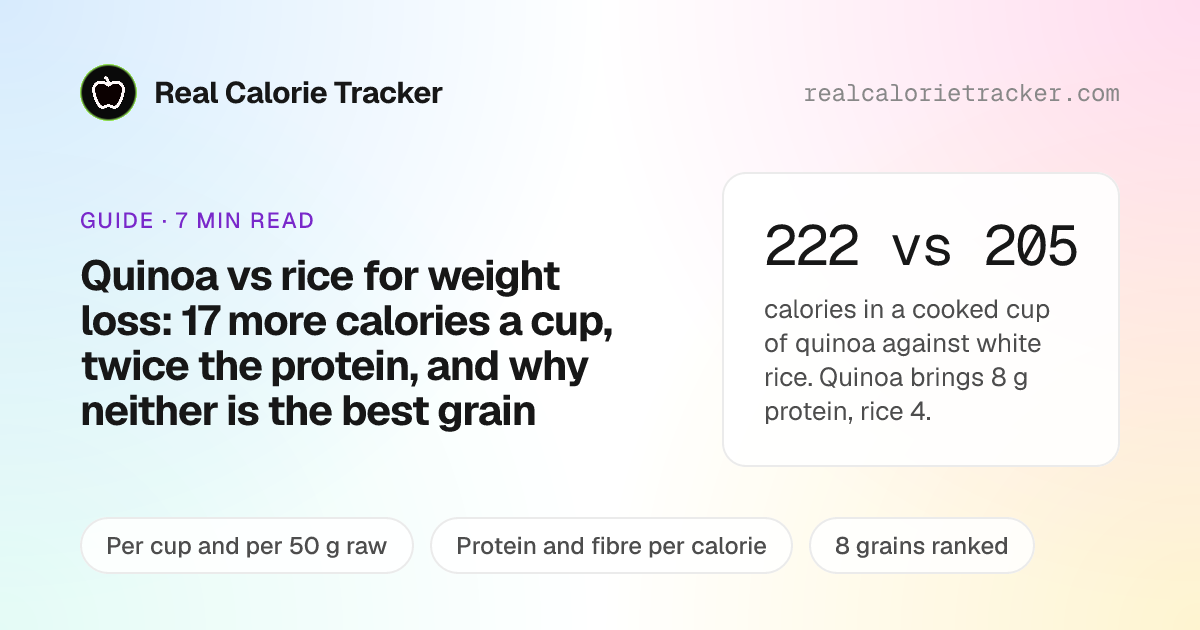
Quinoa is not lower in calories than rice. A cooked cup of quinoa is 222 calories against 205 for white rice and 240 for brown rice. Weighed raw, they are the same food for calorie purposes: 50 g of dry quinoa is 184 calories, 50 g of raw rice 178.
What quinoa does give you is 8 g of protein and 5 g of fibre per cup, against 4 g and 0.6 g for white rice. That is a real advantage on a diet. It is also a smaller one than the health-food aisle implies, and another grain does it better for fewer calories.
Cooked values below are USDA data from the food database; raw rice is from IFCT 2017. The side-by-side quinoa vs white rice page has the full nutrient breakdown.
Per cooked cup, eight grains
| Grain, cooked | 1 cup | Calories | Protein | Fibre | Protein per 100 kcal |
|---|---|---|---|---|---|
| Bulgur | 182 g | 151 | 5.6 g | 8.2 g | 3.7 g |
| Wild rice | 164 g | 166 | 6.6 g | 3.0 g | 4.0 g |
| Couscous | 157 g | 176 | 6.0 g | 2.2 g | 3.4 g |
| Barley, pearled | 157 g | 193 | 3.6 g | 6.0 g | 1.9 g |
| White rice | 158 g | 205 | 4.3 g | 0.6 g | 2.1 g |
| Millet | 174 g | 207 | 6.1 g | 2.3 g | 2.9 g |
| Quinoa | 185 g | 222 | 8.1 g | 5.2 g | 3.7 g |
| Brown rice | 195 g | 240 | 5.3 g | 3.1 g | 2.2 g |
Notice the cup weights. A cup of quinoa weighs 185 g and a cup of white rice 158 g, because cooked quinoa packs denser in the cup. Per 100 g cooked, quinoa is actually the lighter of the two (120 calories against 130). That is why sources disagree on “which has fewer calories”: per 100 g quinoa wins, per cup rice wins, and both answers are a rounding error.
Bulgur is the grain this table is really about. Cracked, par-cooked wheat absorbs a lot of water, so a cup is 151 calories, with more fibre than quinoa and the same protein per calorie. If you are choosing a grain for weight loss on the numbers alone, it is bulgur, then quinoa, and rice is last on fibre. Bulgur is wheat, so it is out for anyone avoiding gluten, which is where quinoa earns its place.
Raw, before the water
Cooked numbers move with how much water the pot took. Raw numbers do not, and they are what you should log if you weigh before cooking.
| Grain, raw | 50 g dry | Protein | Fibre | Cooked yield |
|---|---|---|---|---|
| Quinoa | 184 kcal | 7.0 g | 3.5 g | about 3.1× its dry weight |
| White rice, milled | 178 kcal | 4.0 g | 1.4 g | about 2.7× |
| Brown rice | 177 kcal | 4.6 g | 2.2 g | about 2.9× |
Per gram of dry grain, the three sit within 4 percent of each other on calories. Quinoa carries a little more fat (6 g per 100 g raw, from the germ, which is a large part of the seed) and a lot more protein. Rice is almost pure starch with some protein around it. The yield column is calculated from our raw and cooked values, so it assumes standard USDA cooking; a wetter pot gives a lighter cup.
I portion both the same way: 50 to 60 g dry per person when there is a protein side, 75 g when the grain is most of the meal. That is about 1 to 1¼ cups cooked, and 180 to 275 calories either way.
Why quinoa has more protein, and why it matters less than it sounds
Quinoa is a seed of a plant related to spinach and beetroot, not a grass, and a seed carries its own protein store for the seedling. Rice is a grass grain milled down to the starchy endosperm. That is the whole difference.
“Quinoa is a complete protein” is true and does less work than people expect. Eight grams a cup is about the same as one large egg plus a spoon of yogurt. If you need 100 g of protein a day, quinoa covers 8 percent of it per cup; rice covers 4. The protein you build a cutting diet on comes from elsewhere, as the highest-protein foods per calorie ranking shows: chicken breast gives 19 g per 100 calories, quinoa 3.7.
The meal is where this becomes obvious:
| Plate | Calories | Protein | Fibre |
|---|---|---|---|
| 1 cup white rice + 1 katori dal (150 g) | 379 | 14.8 g | 6.6 g |
| 1 cup quinoa + 1 katori dal | 396 | 18.6 g | 11.2 g |
| 1 cup white rice + 120 g chicken breast | 403 | 41.5 g | 0.6 g |
| 1 cup quinoa + 120 g chicken breast | 420 | 45.3 g | 5.2 g |
Swapping the grain moves the plate by 17 calories and about 4 g of protein. Adding the dal or the chicken moves it by 10 to 37 g. If you eat rice with dal, as most of India does, your plate is already getting the protein-and-fibre benefit people buy quinoa for; rice vs roti makes the same point about the bread side of the meal.
The fibre gap holds up better. Quinoa’s 5 g a cup against white rice’s 0.6 is a large share of the 25 to 30 g a day most adults are told to aim for, and fibre is the part of the swap with a plausible weight-loss mechanism: slower eating and more fullness per calorie. The high-fibre foods per calorie list puts both well below beans and vegetables, though.
Blood sugar: the evidence on quinoa is thinner than its reputation
White rice is well measured. The international glycemic index tables (Atkinson et al., Diabetes Care, 2008) give boiled white rice a GI of 73 and brown rice 68.
Quinoa is usually quoted at around 53, and I could not find the primary test behind that number that I could read in full. The one controlled study I could read, from Egypt (Gabrial et al., Open Access Macedonian Journal of Medical Sciences, 2016), measured a quinoa breakfast at 89 on the white-bread scale, roughly 65 on the glucose scale everyone else uses: lower than white rice, close to brown. That was a mixed meal in 24 people, so it is not the last word. What I would conclude is that quinoa is probably somewhat gentler on blood sugar than white rice, and that eating rice with dal and vegetables narrows the gap more than switching grains does.
So which one?
On a calorie budget, the grain choice is worth about 17 calories a cup. The portion is worth hundreds: two cups instead of one is another 205 to 222 calories whichever grain it is, and a restaurant mound of rice is easily that.
My ranking for weight loss: bulgur if you eat wheat, quinoa if you do not or if you like it, brown rice when you want rice, and white rice when that is what the meal is, measured. Quinoa usually costs several times what rice does per kilo; if you are buying it only to lose weight, put the money into lentils or chicken instead and keep the rice. The brown rice vs white rice guide covers the one place rice choice does matter over years, diabetes risk.
Weigh your grain raw for a week in the tracker and you will know your real portion. The macro calculator tells you how much protein to build around it.
This guide is general information, not medical advice. If you have diabetes or coeliac disease, talk to your doctor or a dietitian about which grains suit you.
This guide is general information, not medical advice. If you're pregnant, have a medical condition or take medication, talk to a doctor or registered dietitian before changing how you eat.
Written by Sheeraz Ali
Sheeraz builds Real Calorie Tracker and uses it every day. The guides come from his own food tracking and from the IFCT 2017, INDB and USDA data behind the site, with sources linked in the text.
Put it into practice
Log your first meal by grams or by serving. Free, no account needed.
More guides
- What 1,200 calories looks like: two real days, and who should not eat it
Two full 1,200-calorie days, Western (131 g protein) and Indian veg (68 g), item by item. Plus the maths on who 1,200 suits and why most men should skip it.
- What 1,500 calories looks like in a day: three real menus
Three full days at 1,500 calories, Western, Indian vegetarian and Indian non-veg, meal by meal with calories and protein for every item. Plus how to tell whether 1,500 is the right number for you.
- What 1,800 calories looks like: three real days, and who it is a diet for
Three full 1,800-calorie days, home-cooked (137 g protein), a bought-lunch workday and Indian veg, item by item. Plus who 1,800 makes lose weight and who it makes gain.