Calories in rajma chawal, chole chawal and kadhi chawal, per plate and per katori
A 350 g plate of rajma chawal is about 490 calories, chole chawal 525, kadhi chawal 420. The rice is half of it. Every curry, rice portion and add-on counted.
By Sheeraz Ali · Published November 3, 2026 · 8 min read
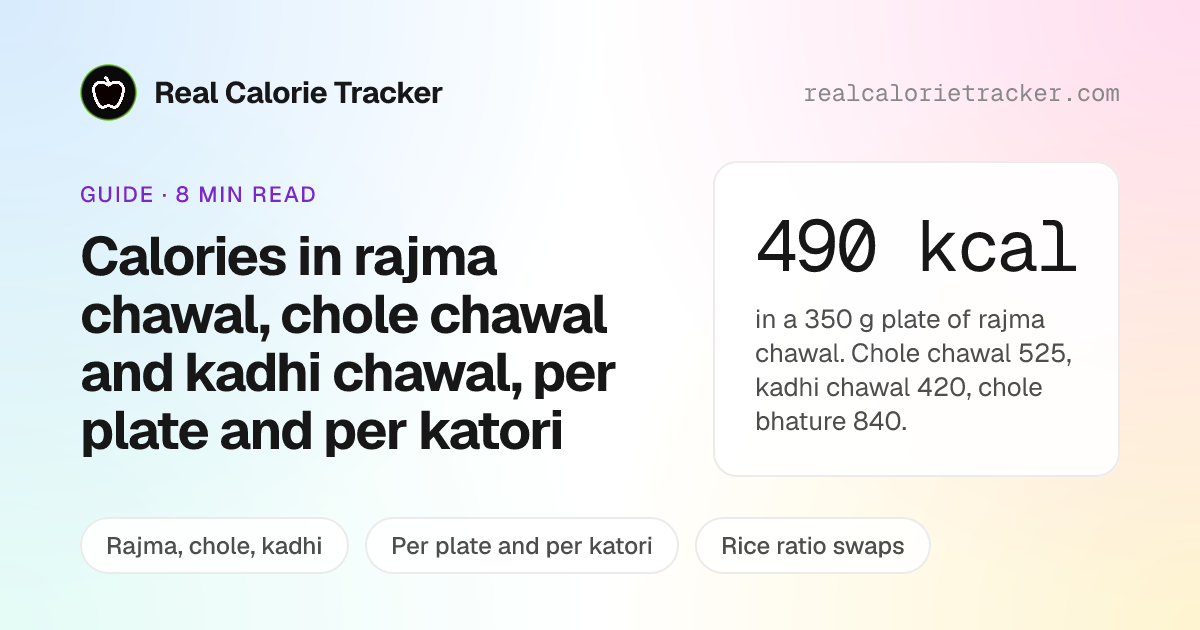
A home plate of rajma chawal, about 350 g, is 490 calories with 16 g of protein and 10 g of fibre. Chole chawal is a little more at 525, kadhi chawal a little less at 420, and chole bhature, the same chole with fried bread instead of rice, is 840. In all three rice plates, the rice supplies half the calories or more, so the size of the rice heap matters more than which curry sits next to it.
The plate figures are our curated entries in the Indian food database; the individual curries come from INDB’s standard home recipes (Indian Nutrient Databank) and the raw beans from IFCT 2017. Every row links to the full nutrition.
The plates
| Plate | Portion | Calories | Protein | Fibre |
|---|---|---|---|---|
| Rajma chawal | 1 plate (350 g) | 490 | 16 g | 10.5 g |
| Chole chawal | 1 plate (350 g) | 525 | 17.5 g | 17.5 g |
| Kadhi chawal | 1 plate (350 g) | 420 | 10.5 g | 5 g |
| Dal chawal, for comparison | 1 plate (350 g) | 455 | 14 g | 9 g |
| Chole bhature | 1 plate, 2 bhature (300 g) | 840 | 21 g | 12 g |
A 350 g plate is a katori of curry (150 g) on a little over a cup of rice (200 g). That is a normal home lunch, not a restaurant one. If you eat off a steel thali and go back for a second ladle of rajma and another spoon of rice, you are at 650 to 750 without noticing.
Two things stand out. Kadhi chawal is the lightest plate but also carries the least protein, 10.5 g, because curd and a little besan do not add much protein once watered down into a kadhi. And chole bhature costs 315 calories more than chole chawal while weighing 50 g less. The bhature account for nearly all of that, which the next sections break down.
The curry alone, per katori
These are the numbers to use when you serve yourself and want to log the curry and rice separately, which is more accurate than logging a “plate”.
| Curry | 1 katori (150 g) | Protein | Fibre |
|---|---|---|---|
| Rajma (home style) | 210 kcal | 9 g | 9 g |
| Kidney bean curry (INDB recipe) | 216 kcal | 9 g | 8.7 g |
| Chana masala | 240 kcal | 10.5 g | 9 g |
| Chickpeas curry (INDB recipe) | 245 kcal | 9.2 g | 7 g |
| Kala chana curry | 212 kcal | 8.6 g | 12 g |
| Lobia curry (black-eyed beans) | 224 kcal | 9.2 g | 6.9 g |
| Khatta chana | 305 kcal | 9.4 g | 8 g |
| Kadhi, no pakoras (estimate, see below) | 120 to 130 kcal | 5 g | 0.5 g |
| Kadhi with 3 pakoras (estimate) | 310 to 320 kcal | 9 g | 2.5 g |
The bean curries cluster tightly: 210 to 245 calories and 9 to 10 g of protein per katori, whether it is rajma, chole or lobia. Pick by taste. Khatta chana is the outlier at 305 because the recipe uses more oil (16 g of fat per katori against 6 for home rajma).
INDB’s kabuli chana curry row is 104 calories per katori, less than half the others, because its recipe is a thin, soupy gravy with few chickpeas per spoonful. If your chole is the thick Punjabi kind, use the chana masala row.
Kadhi is not in our database as a standalone dish, so the kadhi rows are my estimate from ingredients. A Punjabi kadhi for four uses about 400 g of curd (240 kcal), 40 g of besan (155) and a tablespoon of oil for the tadka (124), thinned to about a litre. That is roughly 520 calories in the pot, or 125 per 250 g bowl. Three small fried pakoras (60 g) add about 190. So kadhi pakora is a pakora dish with a curd sauce, calorie-wise, and the pakoras are the part to ration.
The rice decides the plate
Here is a katori of home rajma on different amounts of plain white rice:
| Rice portion (cooked) | Rice calories | + 1 katori rajma | Plate total | Protein |
|---|---|---|---|---|
| 1 cup (158 g) | 205 | 210 | 415 | 13 g |
| 1½ cups (237 g) | 308 | 210 | 518 | 15 g |
| 2 cups (316 g) | 411 | 210 | 621 | 17.5 g |
| 1 cup jeera rice (150 g) | 255 | 210 | 465 | 13.5 g |
| 1 cup brown rice (195 g) | 240 | 210 | 450 | 14 g |
Going from one cup of rice to two adds 206 calories and 4 g of protein. Adding a second katori of rajma instead adds 210 calories and 9 g of protein, plus 9 g of fibre. Same calories, double the protein, and the second plate keeps you full longer. If you want a bigger plate, make the extra rajma, not rice. I serve rajma chawal close to 1:1 by weight for that reason, and it still tastes like rajma chawal.
Brown rice is a fair swap for fibre (3 g per cup against 0.6) but saves nothing on calories. Jeera rice adds 50 for the ghee or oil in the tempering.
Why the numbers look like this
The beans themselves are lean. Cooked kidney beans are 127 calories per 100 g with half a gram of fat. A katori of home rajma uses roughly 45 g of dry rajma, which is 135 calories, 9 g of protein and 7.5 g of fibre. The rest of the katori’s 210 calories is the masala: onion, tomato and about a tablespoon and a half of oil per four servings. Restaurants and dhabas use two to three times that oil and finish with butter or cream, which is how a “rajma” katori reaches 300 to 350.
Chole is denser because chickpeas are. Cooked chickpeas are 164 per 100 g against 127 for kidney beans, mostly more starch and a little fat. Chole chawal’s extra 35 calories per plate over rajma chawal comes from the bean, not the gravy. Whole kala chana is also the fibre champion here: 25 g of fibre per 100 g raw in IFCT, the highest of any common pulse, which is why the kala chana curry shows 12 g a katori.
Kadhi is mostly water and curd. That is what makes it light, and also why it is low in protein. Curd is 3.1 g of protein per 100 g; dilute it with water and besan and a bowl ends up near 5 g.
Bhature are fried dough. Our chole bhature plate is 840 calories; a katori of chana masala is 240 of that, which leaves about 600 for two bhature, roughly 300 each. A maida bhatura puffs in hot oil and the inside surface soaks it up. Two rotis in their place would be 238 calories, making the plate about 480.
How to eat these and still lose weight
These are good plates for a diet. Rajma and chole chawal give 10 to 17 g of fibre per plate, a third to more than half of the UK’s 30 g daily target, and 16 to 18 g of protein for under 550 calories. The high-fibre Indian foods ranking puts the beans behind these curries near the top. What goes wrong is portion and add-ons, not the dish.
- Weigh the rice once. Put your usual serving on a kitchen scale. Most people find it is 250 to 300 g, not the “one cup” they would have logged, and that alone is 120 to 200 calories unaccounted for.
- Go 1:1 on the plate. 150 g of rajma on 150 g of rice is about 405 calories with 13 g of protein. The rice vs roti guide has the same logic for the bread side.
- Count the tadka and the ghee. A teaspoon of ghee on top of rajma chawal is 45 calories. A restaurant pour is a tablespoon, 126.
- Kadhi: eat the kadhi, share the pakoras. Skipping three pakoras saves about 190 calories and you lose almost nothing in protein.
- Chole bhature as a treat, not lunch. At 840 it is half a day’s budget on a 1,600 target. One bhatura with an extra katori of chole is about 780 with more protein; one bhatura and a roti, about 660.
- Add curd or a raita for protein. A katori of curd adds 90 calories and 4.7 g of protein; rajma chawal plus curd is a 580-calorie lunch with 20 g.
If you eat dal chawal more often than rajma chawal, the calories in dal guide covers 17 dals per katori. For where these plates sit on a full day, the thali guide adds up the rest of the meal.
Log the curry and the rice as separate lines in the tracker; it takes ten seconds longer and is far more accurate than one “plate” entry. The calorie deficit calculator tells you how many of these plates fit in your day.
Written by Sheeraz Ali
Sheeraz builds Real Calorie Tracker and uses it every day. The guides come from his own food tracking and from the IFCT 2017, INDB and USDA data behind the site, with sources linked in the text.
Put it into practice
Log your first meal by grams or by serving. Free, no account needed.
More guides
- What 1,200 calories looks like: two real days, and who should not eat it
Two full 1,200-calorie days, Western (131 g protein) and Indian veg (68 g), item by item. Plus the maths on who 1,200 suits and why most men should skip it.
- What 1,500 calories looks like in a day: three real menus
Three full days at 1,500 calories, Western, Indian vegetarian and Indian non-veg, meal by meal with calories and protein for every item. Plus how to tell whether 1,500 is the right number for you.
- What 1,800 calories looks like: three real days, and who it is a diet for
Three full 1,800-calorie days, home-cooked (137 g protein), a bought-lunch workday and Indian veg, item by item. Plus who 1,800 makes lose weight and who it makes gain.